The best alternative to a wedding photo booth is a guest portrait studio: a small, professionally lit set where a photographer takes a considered portrait of each guest, prints it on the day, and gives it to them as a gift from you. This guide explains how guest portraiture and guest video messages work, where they fit in the evening, and how we handle privacy for guests and children.
The short answer: A guest portrait studio needs a corner of about three by four metres and a power socket. Guests drop in during drinks or the evening, a few minutes each, and go home with a fine-art print. You get the whole collection afterwards, plus a film of their messages if you add it.
Guests and cameras raise questions earlier in the day too: our guide to photography and filming rules for every UK ceremony covers who decides what’s allowed during the service, and why many couples keep phones away until the ceremony is over.
What is a good alternative to a wedding photo booth?
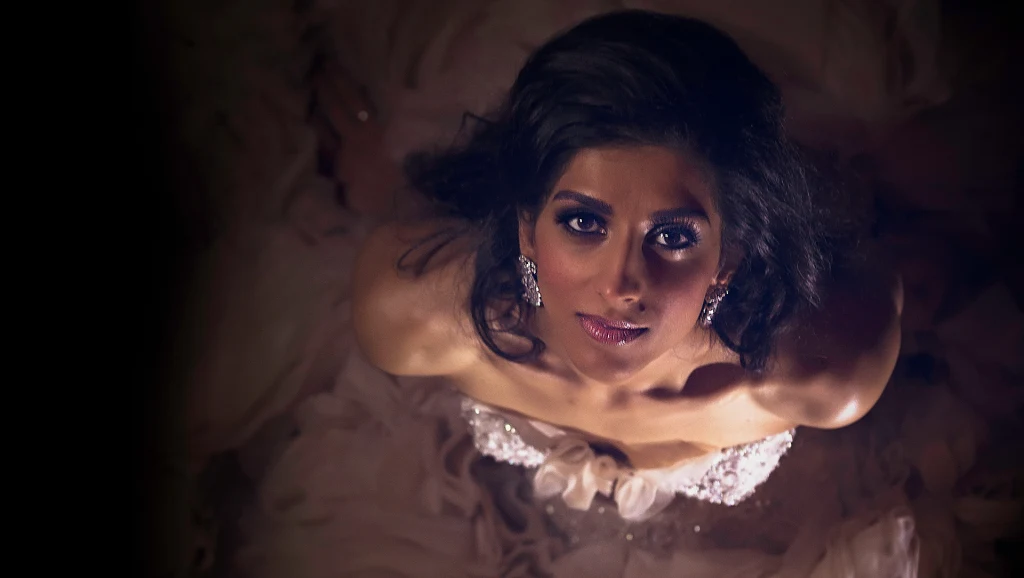
A photo booth is fun for half an hour: a feather boa, a sign, faces pulled at a screen and a strip of prints. It’s light-hearted, and that’s fine, but few of those strips are still on display a month later. Guest portraiture takes the same idea, a moment away from the party just for the guest, and turns it into something people keep:
| Props photo booth | Guest portrait studio | |
|---|---|---|
| Who takes the picture | The guest, with a button or a screen | A photographer who directs each guest |
| What it looks like | Props, flat light, everyone at once | A considered, editorial portrait |
| What guests take home | A strip of small instant prints | A fine-art print, made on site |
| What you keep | A box of strips or a file of snaps | The full collection, edited, to download |
| Words and voices | Sometimes a guest book page | A short video message from each guest, if you add it |
| Camera-shy guests | Often skip it | Gently directed, so they look relaxed |
How does a guest portrait studio work?
This is how our guest portraiture runs on the day:
- We set up a studio. A small, professionally lit portrait set in a quiet corner of your venue, with a backdrop chosen to suit your styling.
- Guests drop in. During the drinks reception or the evening, they come by on their own, as couples or as families. A few minutes each, with gentle direction.
- We edit as we go. Behind the scenes, the best frame of each guest is chosen and retouched with a light touch.
- We print on site. Portraits are printed on archival fine-art paper at the venue.
- The reveal. The prints are displayed for guests to find at the end of the evening, or at a farewell brunch, and each guest takes theirs home.
- A gallery to keep. After the wedding you receive the full collection, and every guest can download their own portraits.
It has its own photographer and set, so your main photographer stays with the speeches and the dance floor.
Can guests record video messages too?
Yes, and for many couples this becomes the part they treasure most. While each guest is in the studio, already relaxed and well lit, they can record a message to you of up to thirty seconds: best wishes, a memory, some advice, or a joke only you will understand.
- Filmed properly, on cinema cameras with clean sound, not shaky phone footage.
- Gently prompted, so nobody freezes: “How do you know them?”, “What do you wish for them?”
- Delivered as one edited film, with every individual message as well.
For grandparents, friends from abroad and the people you see too rarely, these are the voices you’ll want to hear again. Guest messages can also be booked on their own, or with our wedding films, with a small message corner at your reception.
Where does guest portraiture fit in the evening?
The studio works best when guests have time on their hands: the drinks reception, and the evening after the first dance. It pauses for the ceremony, the meal and the speeches.
Bridebook’s UK Wedding Report 2026 found an average of 74 guests at the ceremony and about 21 extra evening guests, so if you want everyone, the evening session matters as much as the drinks. An example, with a 13:00 ceremony:
| Time | What happens | Guest studio |
|---|---|---|
| 14:00 | Drinks reception | Studio open: families, older guests and anyone leaving early come first |
| 16:00 | Wedding breakfast and speeches | Studio paused; prints from the afternoon are edited and printed |
| 19:30 | Evening guests arrive | Studio reopens for evening guests and anyone not yet photographed |
| 20:00 | First dance | Studio paused, so nobody misses it |
| 20:15 | Party | Studio open; groups of friends often come together |
| 22:30 | The reveal | Prints displayed for guests to find on their way out |
Tell us your guest numbers and we’ll plan the sessions. For the rest of the day, see our sample wedding day timelines.
At multi-day celebrations it can run at the sangeet, mehndi or reception. Our guide to photo and film for the mehndi and sangeet covers those evenings.
How is a guest portrait studio lit?
The set is lit like a portrait studio, not like the room around it, so the light doesn’t change when the sun goes down or the room is dimmed for the first dance. A guest photographed at 3pm and one photographed at 10pm belong in the same collection.
From the venue we need a corner of around three by four metres near the reception, one power socket, a spot away from the dance floor speakers if you are adding video messages, and a table or wall near the exit to display the prints. We check the room with your venue in advance.
How do guests get their photos?
On the night, each guest takes home their print. After the wedding, you receive the full collection and every guest can download their own portraits. We agree with you beforehand how guests receive them, so nobody’s images travel further than they would expect.
What about privacy and consent for guests and children?
Guests’ own photos, taken on their phones for personal use, fall outside UK GDPR under the “domestic purposes” exemption. The Information Commissioner’s Office says that posting photos to a public account viewable by an indefinite number of people is likely to go beyond personal use, and that children need extra care. The ICO notes that this guidance is under review following the Data (Use and Access) Act 2025.
A professional studio is responsible for the images it takes:
- Taking part is a choice. Guests choose to come to the studio, and nobody is photographed there who’d rather not be.
- Tell your guests. A line on your wedding website or invitation about the portrait studio helps everyone know what to expect.
- Your gallery is private. We use an identifiable guest’s portrait beyond your gallery, such as on our website or social media, only with their consent.
- Children are photographed with a parent present. We never name or tag them, and we use a child’s portrait beyond your gallery only with a parent’s consent.
- Your rights as a couple. Under section 85 of the Copyright, Designs and Patents Act 1988, you can stop commissioned wedding photos being shown in public, so any portfolio use is agreed with you in writing first.
From behind the camera
The portraits people keep are the unguarded ones, and that comes from the conversation, not the light. In the studio I talk to each guest about how they know the two of you before I lift the camera, and the answer usually gives me the picture: the uncle who stands taller when he talks about you, the best friends who can’t keep a straight face. Camera-shy guests are often the ones who surprise themselves most, and the same approach helps couples too: see our guide for the camera-shy.
On film, I’ve learned to let the silence run. Guests often say their prepared line and stop, then add the thing they really meant after a pause. That second sentence is usually the one that ends up in the film.
Frequently asked questions
What is a good alternative to a wedding photo booth?
A guest portrait studio: a small, professionally lit set in a corner of your venue, where a photographer directs each guest for a few minutes. Instead of props and instant strips, every guest gets a considered portrait printed on fine-art paper on the day, and you keep the whole collection. Many couples add a video message from each guest.
Does guest portraiture replace our wedding photographer?
No. Guest portraiture runs alongside your main wedding photography and film, whether that is with us or with another photographer. It has its own photographer and set, so nothing is taken from your coverage, and your main photographer stays free for the speeches and the party.
How much space does a guest portrait studio need?
A corner of around three by four metres near the reception, with a power socket. If you are adding video messages, choose a spot away from the dance floor speakers, because sound matters. We check the room with your venue in advance, so the set is ready before guests arrive.
Can we photograph children in the guest portrait studio?
Yes, and families with children are often the portraits people treasure most. Children’s images need extra care, so we photograph them with a parent present, never name or tag them, and only use an identifiable child’s portrait beyond your private gallery, such as on our website or social media, with a parent’s consent.
Keep reading
- Camera-shy? How to relax in front of a photographer and filmmaker: the same gentle approach we use in the guest studio.
- Mehndi and sangeet: planning photo and film for the night before: an evening where a guest studio works especially well.
- Wedding day timeline UK: sample schedules to fit the studio around your drinks, meal and party.
Want every guest to go home with a portrait, and to keep their words too? Ask about adding guest portraits to your wedding.