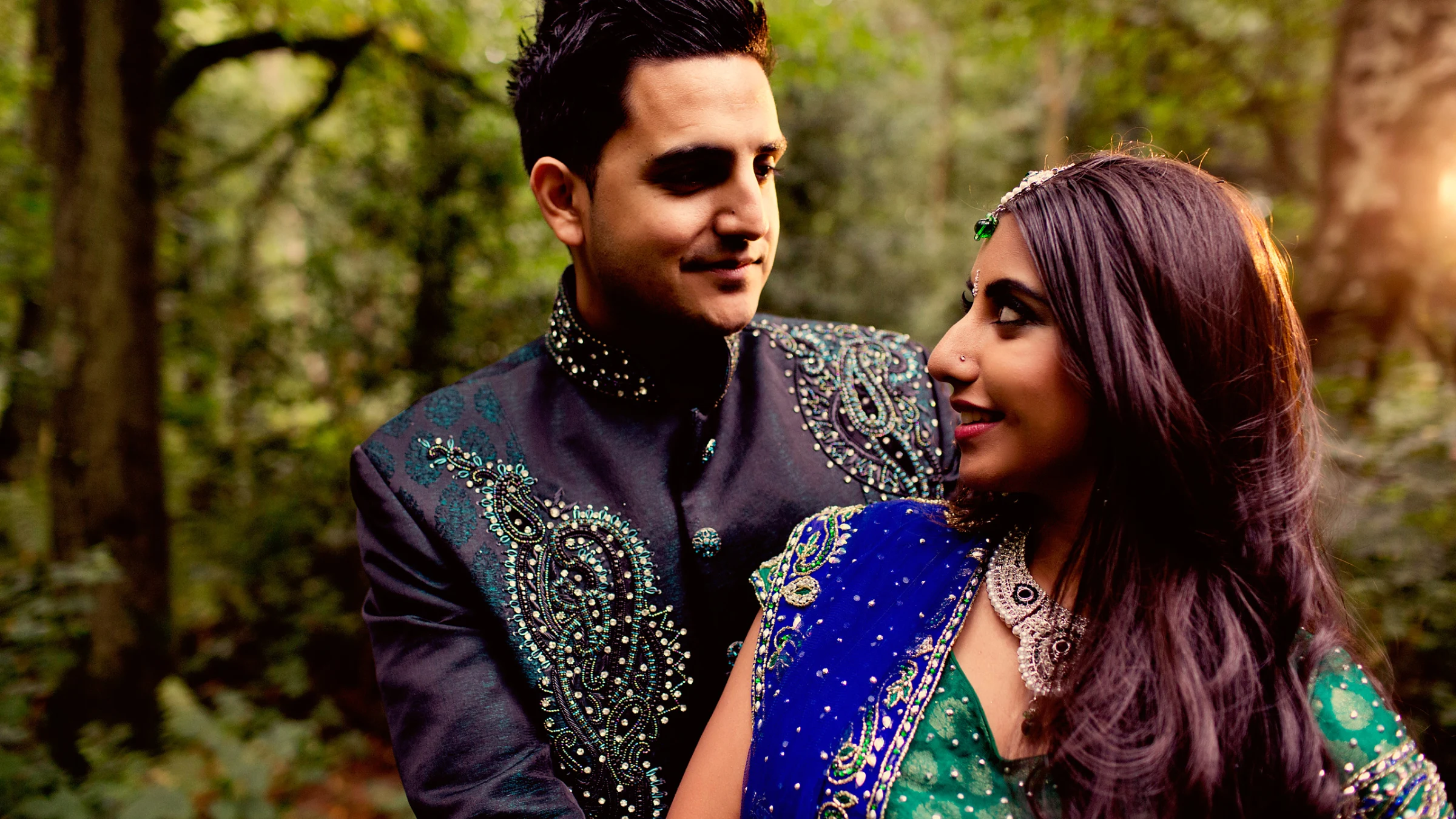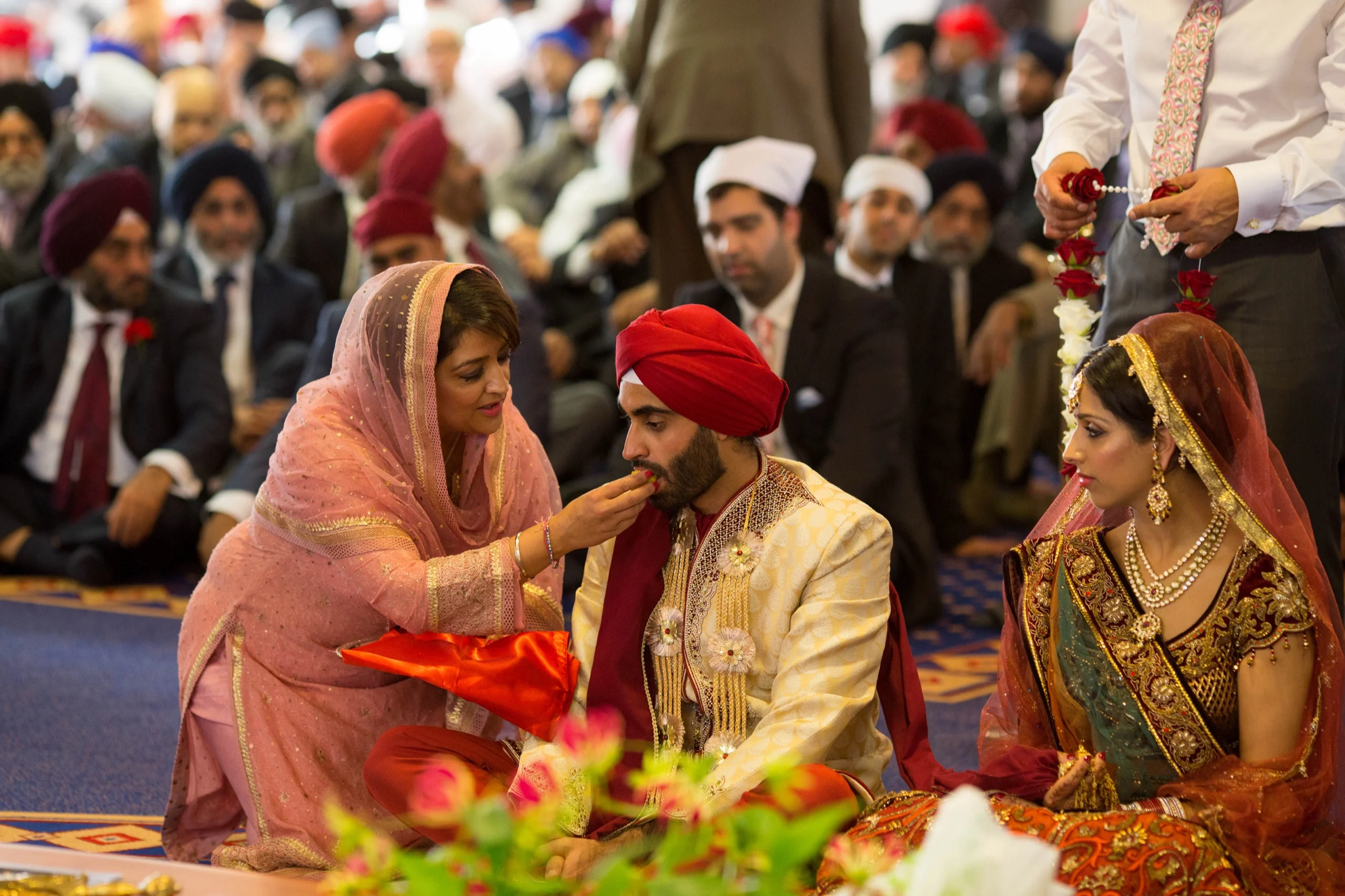
A Sikh wedding is a day of devotion and celebration in equal measure: the hush of the gurdwara during the laavan, then the bhangra at the reception that night. We make Sikh wedding films and photographs that honour both.
The Anand Karaj, the blissful union, is one of the most beautiful ceremonies we film. It is calm, spiritual and full of family, and it moves at its own pace, so we plan carefully with you beforehand: who is in the milni, when the chunni is placed, where the family will sit in the darbar hall, and which moments your parents and grandparents would never want missed.
The day, from milni to doli
- The milni. The two families meet at the gurdwara, the relatives embrace and exchange garlands, and a little friendly competition is never far away.
- The Anand Karaj. The groom and bride sit before the Guru Granth Sahib, the palla is placed in the bride’s hand by her father, and the ragis begin to sing.
- The laavan. Four hymns, four rounds of the Guru Granth Sahib, with brothers and cousins guiding the bride at each turn. It is the heart of the ceremony, and we film every round.
- The chunni ceremony. Often held at the engagement or before the wedding, as the groom’s family welcomes the bride with a chunni and gifts.
- The doli. The bride’s farewell to her family home, one of the most emotional moments of the whole wedding.
- The reception. Grand entrances, speeches, the first dance and a dance floor full of bhangra until the very end.
The film
A Sikh wedding in London
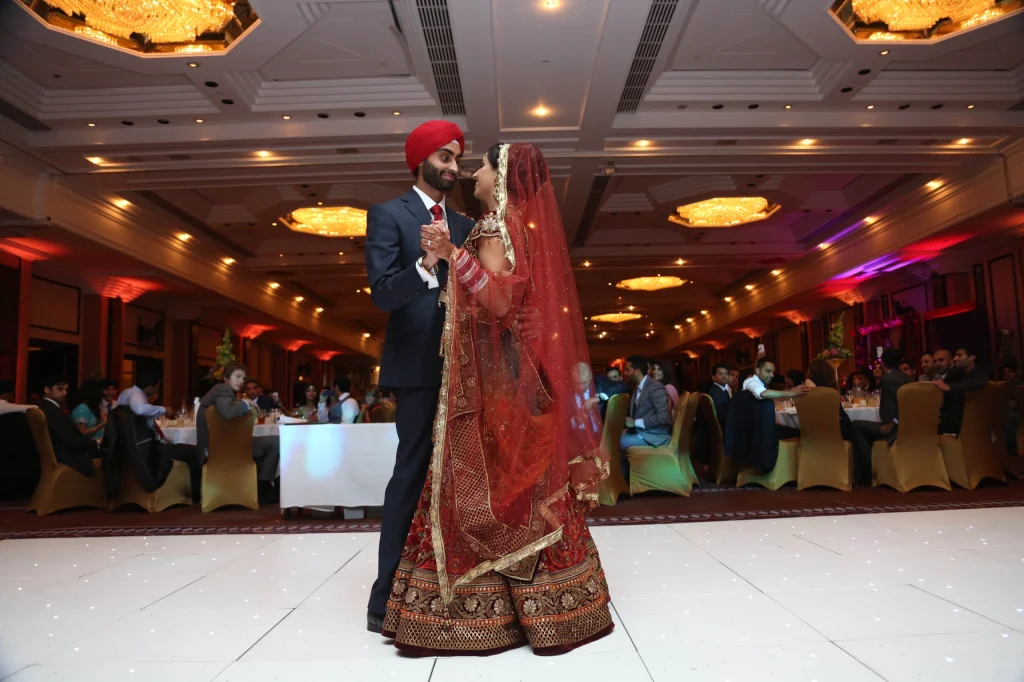
The milni, four laavan, the doli and the dance floor, cut to music.
The portraits
Between the ceremony and the reception
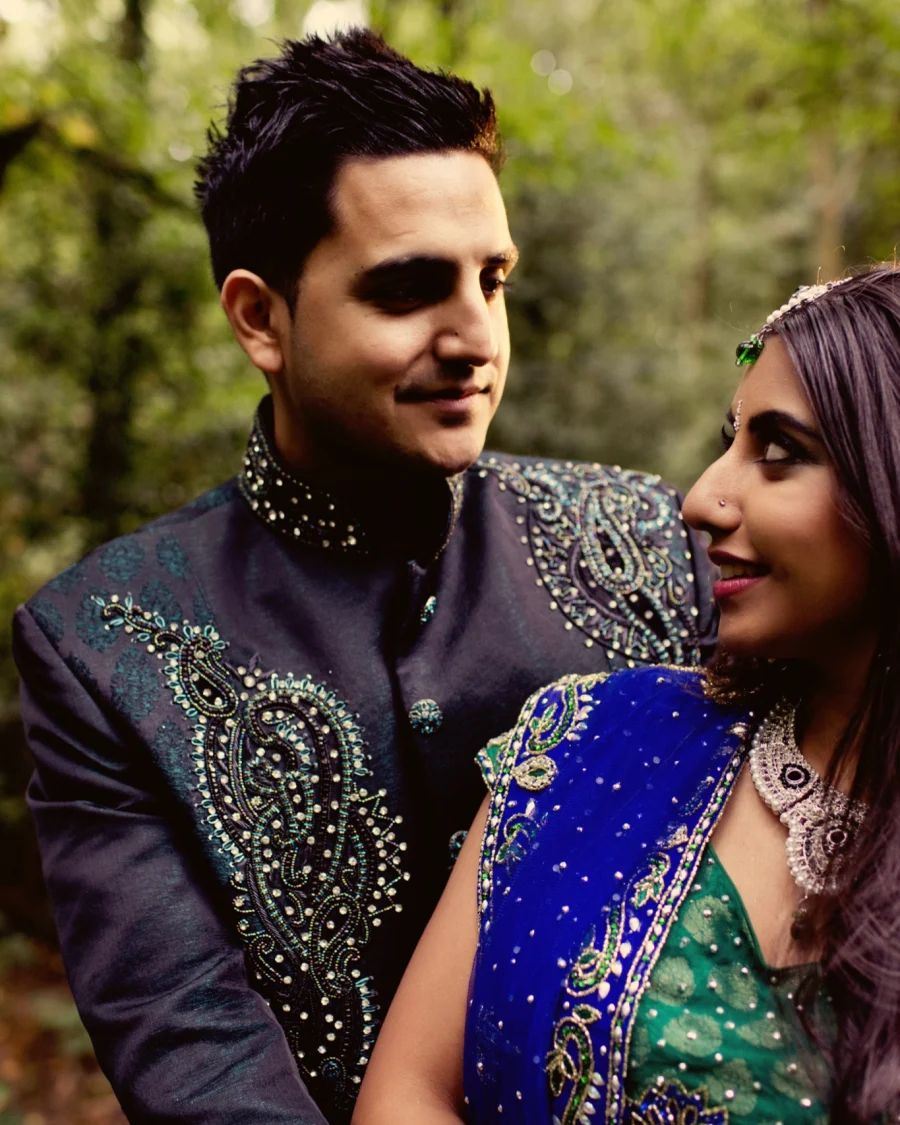
Twenty quiet minutes, just the two of you, in the best light of the day.
Gurdwara rules, always respected
The gurdwara is a place of worship first, and we behave accordingly. Our heads are covered, our shoes come off at the door, and we never turn our backs to the Guru Granth Sahib or stand between the congregation and the palki. We move slowly and quietly, use no flash during the ceremony, and agree our positions with the granthi before the laavan begin. Every gurdwara has its own guidance, and we ask in advance and follow it.
That respect is what lets us stay close to the moments that matter, so your film and photographs show the ceremony as it really felt: the families sitting together, the light through the windows, the bride’s hand in her father’s as the palla is passed.
Sikh wedding films and photography
Our wedding films are shot on cinema cameras, with clean audio of the kirtan and the speeches, and edited into a highlight film you will watch again and again. See our Sikh wedding highlights video. Book wedding photography as well and one team covers everything, from the morning at home to the last song, for less than booking separately.
Each event, from the mehndi and maiyan to the Anand Karaj and the reception, is priced on its own. Film starts from £1,430 and photography from £830. See our guide to Asian weddings in London, or our fusion weddings if your day brings two traditions together.
Your questions, answered
Can you film inside the gurdwara?
Many gurdwaras welcome filming and photography during the Anand Karaj, within their guidance. We always check in advance, cover our heads, remove our shoes and follow the granthi’s instructions.
Which events should we book?
Most couples book the Anand Karaj and the reception, and many add the maiyan, the mehndi or the jaggo. Each event is priced separately, so you choose.
Do you cover Sikh weddings outside London?
Yes, across the UK, including the Midlands, and abroad.
The gurdwara ceremony starts early. Is that a problem?
Not at all. Morning ceremonies are normal, and we plan our arrival so we are there for the baraat and the milni.