An Asian bridal morning has more parts than most: a heavy lehenga or saree, a dupatta to pin, jewellery from forehead to ankle, hair and make-up that can take hours, and often a ritual such as the chooda in the middle of it. The way to keep it calm is to plan the order with your artist, gather everything the night before, and give each helper one clear job.
This checklist covers the outfit, the dupatta, jewellery, timings, mehndi care, your kit, helpers, outfit changes and what to give your photographer. It is part of our day-by-day guide to a multi-day Asian wedding. Every family and region does things differently, so swap in the pieces and rituals your family actually uses.
The short answer: ask your artist for a written running order, allow 45 minutes to an hour to get into the outfit, pin the dupatta and put on the jewellery, and be fully dressed 30 minutes before you leave. Lay out the jewellery, outfit and details before your photographer arrives, two to three hours before you leave.
The outfit: lehenga, saree, salwar or sharara
The weeks before matter more than the morning.
- [ ] Final fitting with the blouse and the shoes you will wear, so the hem sits at the right height.
- [ ] Practise walking, sitting and stepping in the full outfit. At a gurdwara you sit on the floor, at a mandap you sit for long stretches, and a heavy lehenga needs practice on stairs.
- [ ] Book the saree draper if nobody in the family drapes. Some brides have the pleats set in advance to save time.
- [ ] Steam everything the day before, dupatta included. Creases show on camera far more than in the mirror.
- [ ] Hang it properly: out of the bag, on a wooden or padded hanger, near the window.
Regional outfits bring their own steps. A Gujarati bride may wear a panetar from her maternal uncle, a Bengali bride a Banarasi saree with her shakha and pola, a Tamil bride a Kanjivaram silk with temple jewellery, a Pakistani bride a gharara or sharara. Ask whoever knows your tradition best which pieces go on at home and which are given during the ceremony, so nothing goes on too early.
Dupatta pinning: who, when and how many pins
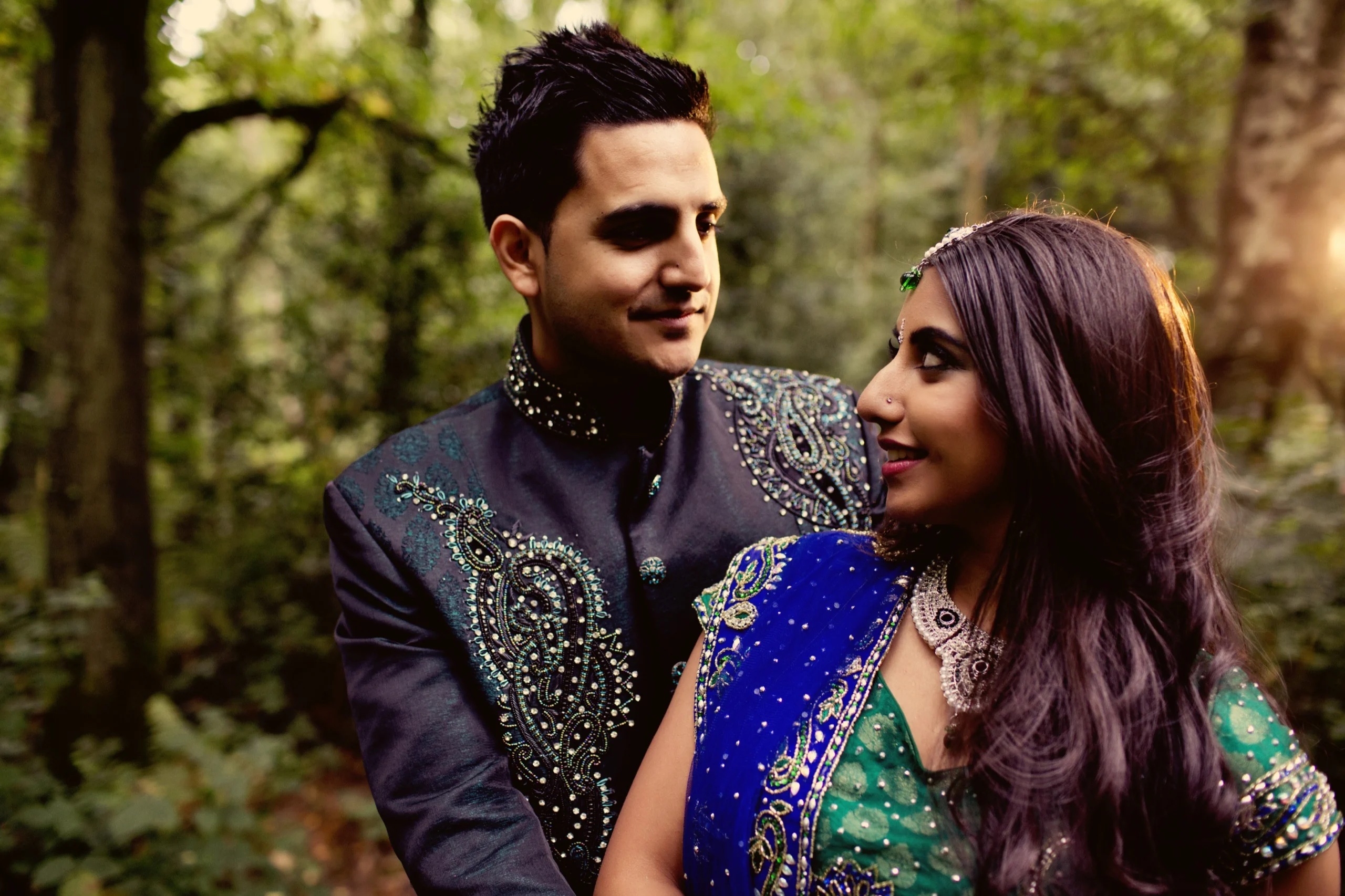
The dupatta is the part most likely to slip, and the most visible in your photographs.
- Decide who pins it. Many make-up artists include dupatta setting in the bridal look; others expect a relative to do it. Agree this at your trial.
- One dupatta or two? Many brides wear one over the head and a second across the shoulder. Each needs pinning separately.
- Pin into the hair, not just the fabric. Small pins grip the hair; safety pins hold the shoulder, blouse and waist.
- Test it. Walk, sit, turn your head and lift your arms before you leave.
- Name a dupatta helper who checks it before the ceremony, the portraits and the entrance.
Jewellery: lay it out before it goes on
Gather every piece onto one tray the night before, and decide who brings anything still with family.
- [ ] Maang tikka or matha patti, and a jhoomar or passa if you wear one
- [ ] Nath, with its chain or hook for the hair
- [ ] Earrings, with sahare (ear chains) for heavy jhumkas, and spare backs
- [ ] Necklaces: choker, rani haar or long set
- [ ] Bangles; the chooda and kalire (kaleere) for Sikh and many Punjabi brides; shakha and pola for Bengali brides
- [ ] Haath phool, rings and payal (anklets)
- [ ] Anything handed down, with a note of whose it was
Your photographer will want the jewellery together before you put it on, so have the tray ready when they arrive. For Sikh and many Punjabi brides, the chooda is given by the maternal family and the kalire are tied by sisters and friends. Because UK gurdwaras start early, the chooda often happens around 06:00 or the night before, as our clock-time plan for a Sikh wedding day explains. Hold it in a living room with the curtains open rather than a dim bedroom.
How long do Asian bridal hair and make-up take?
Ask your artist. Timings vary with the artist, the look and how many people they are getting ready, so get their running order in writing a few weeks before and send it to your photographer. In our experience a full bridal look often takes three hours or more before you get dressed.
Here is an example built backwards from leaving at 09:30 for a 10:30 ceremony. Replace the times with your artist’s.
| Time | What happens | Notes |
|---|---|---|
| 05:00 | Artist arrives and sets up by the window | |
| 05:30 | Bride’s make-up begins | Family before you, or with a second artist |
| 06:15 | Photographer arrives, if the chooda is this morning | Otherwise about 07:00 |
| 06:30 | Chooda and kalire, where part of your tradition | Close family, curtains open |
| 07:00 | Hair and maang tikka | |
| 08:00 | Make-up finished; jewellery photographed; eat something | Ten minutes, sitting down |
| 08:15 | Dressing: outfit and jewellery on, dupatta pinned | 45 minutes to an hour |
| 09:00 | Family portraits by the window; blessings | Dressed 30 minutes before you leave |
| 09:10 | Touch-ups, water, a breath | |
| 09:30 | Leave for the ceremony |
Three things stretch these timings: a winter morning, when London’s sun doesn’t rise until around 08:00 in mid-December according to sunrise-sunset.org, so early make-up happens under lamps; a gurdwara or mandir with a fixed start time; and a long drive. For the room itself, choose the biggest window, leave floor space for the lehenga and clear the clutter. Our guide to choosing the room for getting-ready photos explains why.
Mehndi care before the wedding morning
Your hands and feet will be in hundreds of photographs, so look after the henna.
- Time it for colour. Henna usually darkens over a day or two after the paste comes off, so most brides have it applied one or two days before. Ask your henna artist.
- Do nails, waxing and treatments first, not after the mehndi.
- Leave the paste on as long as your artist suggests, and keep water off it for the first hours.
- On the morning, avoid anything oily on your hands before the photographer arrives: it shines under lights.
If the groom’s initials are hidden in the design, tell us. Our guide to photographing the mehndi night covers the evening itself.
The bride’s kit: what to have in the room
- [ ] Safety pins in two sizes, and small hair pins in your hair colour
- [ ] Double-sided fashion tape, needle and thread in your outfit colours, small scissors
- [ ] Spare earring backs and a spare nath hook
- [ ] Blotting papers, your lip colour and kajal
- [ ] A handheld steamer
- [ ] Flats or juttis, and a shoe bag for the gurdwara, mandir or mosque door
- [ ] Water with a straw, and food you can eat without smudging anything
Our wedding day emergency kit list covers what everyone else should carry.
Family helpers: one job each
| Helper | Job |
|---|---|
| Dupatta helper | Checks the dupatta and lehenga before every move |
| Keeper of things | Holds the jewellery pouch, kit bag and your phone |
| Timekeeper | Knows the running order and gently moves everyone on |
| Family caller | Gathers people for the group photographs |
Tell each helper their job the night before. The family caller matters most at a big wedding: our guide to planning your family photo list explains how to group households.
Outfit changes across the events
Most Asian brides wear several outfits across the week: something light for the mehndi, often with short sleeves so the henna isn’t smudged; something you can dance in for the sangeet; the heaviest look for the ceremony; and a new outfit for the reception.
Allow 60 to 90 minutes to change from ceremony to reception: ceremony jewellery off, dupatta unpinned, hair restyled, make-up refreshed, then new jewellery and a new dupatta pinned. If you love your ceremony outfit, plan 20 minutes of couple portraits before you change, not after, and tell us whether you want the reveal of the reception outfit filmed or kept private.
What to give your photographer for the details
Have these together when your photographer arrives:
- Both families’ invitation cards.
- The jewellery tray, before anything goes on.
- The outfit and dupatta on a good hanger.
- Shoes or juttis, the kalire, and any bangles still to be given.
- Anything handed down, with its story.
Our Asian weddings page explains how we cover each event, and for the ceremony itself, see the Hindu wedding moments to plan for.
From behind the camera
The most useful thing an Asian bride can send us before the wedding is her artist’s running order. With it, I know when the jewellery will be on the tray, when the dupatta goes on and when the family will be in the room, so we are there for the moments rather than waiting in the corridor.
On film, the morning is mostly sound: an aunt explaining which bangles were her mother’s, the laughter while the kalire are tied, a father seeing his daughter dressed for the first time. A quiet room with a big window and a few people gives us all of it.
Frequently asked questions
How long does Asian bridal hair and make-up take?
It depends on the artist and the look, so ask yours for their own timings and get them in writing. In our experience a full bridal look with hair and make-up often takes three hours or more, before you get dressed. Add time for mothers and sisters if the same artist is doing them, and a buffer for touch-ups.
How long does it take to put on a lehenga, dupatta and jewellery?
Allow 45 minutes to an hour from stepping into the lehenga or saree to being fully dressed, with the dupatta pinned and every piece of jewellery on. Pinning a heavy dupatta securely is the part that takes longest, and it should not be rushed. Then aim to be ready at least 30 minutes before you leave.
How do you keep a heavy dupatta in place all day?
Have it pinned by your make-up artist or one briefed helper, using plenty of small pins into the hair and safety pins at the shoulder and waist, and do a test walk and sit before you leave. Bring spare pins in your kit, and give one person the job of checking the dupatta before the ceremony, the portraits and the entrance.
Keep reading
- Your wedding morning: getting-ready photos: choosing the room, the light and the details box.
- Mehndi and sangeet photography: planning the henna and the night before.
- Sikh wedding day timeline in the UK: clock times from the chooda to the reception.
Planning your wedding week? Tell us each event and where you will be getting ready, and we will price them all together.