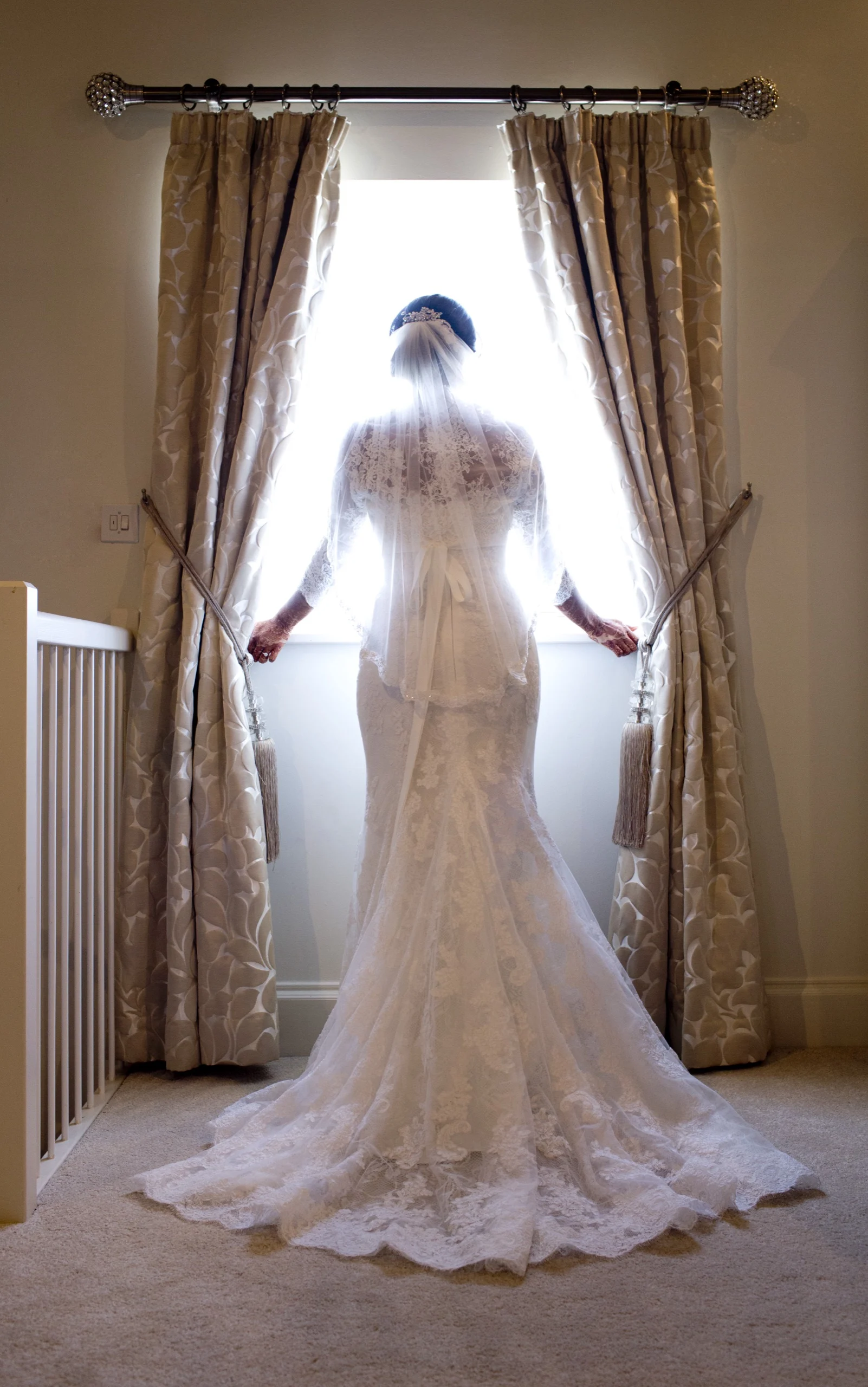
Good getting-ready photos come from three things: a tidy room with a big window, a running order that leaves time to spare, and your small details gathered in one place before the photographer arrives. Get those right and the rest of the morning can simply happen. This guide covers what to do and what to avoid, a sample morning timeline, the groom’s side, and a few notes for Asian bridal preparations.
The morning sets the pace for everything after it, so it’s worth reading alongside our UK wedding day timeline guide, which shows how preparations fit around 11am, 1pm and 3pm ceremonies.
When should the photographer arrive for getting-ready photos?
For most weddings, about two to three hours before you leave for the ceremony. That covers the details, the last stretch of hair and make-up, getting dressed and a few portraits with the people around you. Arriving at 7am to photograph rollers in hair rarely adds much.
Here is a morning for a 1pm ceremony, with the venue 20 minutes away and two of us covering both sides:
| Time | Bride’s side | Groom’s side |
|---|---|---|
| 08:00 | Hair and make-up starts with the bridal party and mothers | |
| 10:00 | Photographer arrives: room, details, outfit, candid hair and make-up | |
| 10:45 | Bride’s make-up finishing; letters and gifts | Filmmaker arrives: details, getting dressed, buttonholes |
| 11:30 | Getting dressed, with one or two people helping | Portraits with groomsmen and family |
| 11:50 | Portraits with family and bridal party by the window | Leaves for the venue |
| 12:05 | A quiet ten minutes: water, food, a breath | Greets guests at the venue |
| 12:35 | Leaves for the ceremony | Waiting at the front |
| 13:00 | Ceremony |
The 12:05 slot looks like a luxury. It is the buffer for a late hairdresser, a stuck zip or a missing flower, and on most mornings something uses it.
How do you prepare the room for getting-ready photos?
The room shows up in every frame, so give it ten minutes before the photographer arrives.
- Choose the room with the biggest window. In a hotel, ask for a larger room or a suite for the morning.
- Clear the clutter. Bags, bottles, coffee cups, food packaging, chargers, dry-cleaning covers and spare hangers go in a wardrobe or another room.
- Make the bed. It ends up behind half your photographs.
- Turn off overhead lights. Yellow ceiling bulbs mixed with daylight make skin look patchy. Window light alone is softer and truer.
- Put the make-up chair near the window, facing it or side-on. It helps your make-up artist as well as your photographer.
- Turn the television off and the music down. The film picks up every sound in the room, and you will want to hear the people, not the breakfast news.
In winter the light arrives late: in mid-December London’s sun rises at around 8am. Window light stays low and soft all morning, but the room darkens early if preparations run into the afternoon.
Where should you hang the dress or outfit?
Take it out of its bag and off any plastic or wire hanger. Hang it from a wooden or plain hanger near the window, a door frame or a wardrobe, where there is a little space around it. Steam it the day before if you can.
The same goes for suits, sherwanis, lehengas, saris and anything else being worn. A well-hung outfit is a photograph on its own, and it means getting dressed is quicker when the time comes.
What goes in a wedding details box?
Gather everything small into one box or tote the night before, and hand it to the photographer when they arrive. Typical contents:
- [ ] Rings (or confirm exactly who has them)
- [ ] Your invitation and any other stationery
- [ ] Perfume or aftershave
- [ ] Shoes
- [ ] Jewellery, earrings, hair pieces
- [ ] Cufflinks, a watch, tie or pocket square
- [ ] Letters and cards from each other or from family
- [ ] Anything borrowed, handed down or with a story behind it
- [ ] Buttonholes or a bouquet, if they have arrived
A details box saves twenty minutes of searching hotel drawers, and keeps the rings safe.
What order should hair and make-up go in?
Ask your hair and make-up artist for the running order a few weeks before, and check it against your photographer’s arrival time.
- Bridesmaids, mothers and family first. They need to be ready for photos too.
- The bride (or whoever has the most involved look) towards the end, but not last with no slack. Plan for them to finish at least 30 minutes before getting dressed.
- Leave time for touch-ups once you are dressed, especially lipstick and hair.
- Know what “finished” means. Many artists film or photograph their work for social media at the end. That is fair, but agree how long it takes so it doesn’t eat into your photographer’s time.
In our experience, hair and make-up running late is the most common reason a morning slips. It is rarely anyone’s fault, which is why the buffer exists.
Letters, gifts and the people around you
Some of the best moments of the morning have nothing to do with the outfit: a letter from your partner, a gift from a parent, a sibling helping with a button.
- Tell your photographer and filmmaker if a letter or gift is coming, and roughly when.
- If you are happy to, read the letter aloud. On film, your voice reading it can become the opening of your highlight film.
- Keep the room quiet for that minute: music down, door closed.
- Think about who you want with you when you get dressed. One or two people, not twelve.
Don’t forget the groom’s side
Getting-ready coverage isn’t only for brides. Buttonholes, cufflinks, a father straightening a tie, a turban being tied or a sehra being placed, and friends who are suddenly nervous for you are all worth having. Grooms’ rooms need the same ten-minute tidy, and our wedding day tips for grooms cover the rest of the morning.
If two of us are covering your wedding, one usually stays with each side. If the two of you are getting ready far apart, tell us early so we can plan arrival times that work for both.
Phones down, food in
- Eat a proper breakfast and something again an hour before you leave. A hungry, light-headed couple looks tired in photographs by 3pm.
- Drink water, and go easy on the fizz before the ceremony.
- Hand your phone to someone. Ask a friend to field messages and calls. Your photographs will show you talking to people instead of looking at a screen.
- Ask the room to do the same. Ten phones held up while you put on your shoes ends up in every frame.
Asian bridal preparations: a few notes
Many Asian bridal looks take much longer than a typical bridal hair and make-up, and the timings above stretch accordingly. A few things to plan for:
- Ask your artist how long the full look takes, including dupatta pinning and setting jewellery, and add a generous buffer. Pinning a heavy dupatta securely is not something to rush.
- Jewellery is a set of photographs in itself: maang tikka, nath, earrings, necklaces, the chooda and kaleere where they are part of your tradition. Lay them out together before they go on.
- Mehndi hands photograph best in daylight, so keep a few minutes by the window for close-ups.
- The family moments matter as much as the look. A mother or aunt helping with the dupatta, or grandparents giving a blessing, are often the photographs families treasure most.
Our full Asian bride’s getting-ready checklist goes further, and our Asian weddings page explains how we cover each event.
What not to do on your wedding morning
- Don’t get dressed in the smallest, darkest room because it is nearest.
- Don’t leave the rings in a jacket that has already left for the venue.
- Don’t take on last-minute seating plans or supplier calls.
- Don’t let the room fill up with people. A calm room photographs better than a crowded one.
For a wider list of what trips couples up, see our wedding planning mistakes guide.
From behind the camera
When I arrive on a wedding morning, I look for two things before I take a single photograph: where the light comes from, and where people will naturally stand. Then I quietly move a lamp, a bag and a chair, and the room is ready. The best getting-ready photographs are rarely posed. They are the half-second when a parent sees you dressed for the first time, which is why we would rather be in the room early and unnoticed than arrive late and ask you to repeat things.
For film, the morning is mostly about sound. The laughter, the letter read aloud, the last “you look beautiful” at the door. A quiet room gives us all of it. You can see how we plan the whole day on our wedding photography page.
Frequently asked questions
When should the photographer arrive for getting-ready photos?
For most weddings, about two to three hours before you leave for the ceremony. That gives time for the details, the last stretch of hair and make-up, getting dressed and a few portraits with the people around you. If your preparations are long, as with many Asian bridal looks, or both sides are getting ready in different places, plan arrival times together.
What should be in a wedding details box?
Everything small you want photographed, gathered in one place before the photographer arrives: rings, invitation and stationery, perfume or aftershave, shoes, jewellery, cufflinks, a watch, letters, and anything borrowed or handed down. A shoebox or tote works. Make sure the rings are in it, or that someone you trust knows exactly where they are.
Should the groom have getting-ready photos?
If the morning matters to you, yes. Buttonholes, cufflinks, a father fixing a tie, a turban being tied or a sehra being placed, and friends who are suddenly nervous for you all make good photographs and film. With two of us, one can usually cover each side. If you are far apart, tell us early so we can plan the timings.
Keep reading
- Wedding day tips for brides: what to do, and not do, from the morning to the last dance.
- Wedding day tips for grooms: the groom’s side of the day, from someone who has watched hundreds of them.
- The Asian bride’s getting-ready checklist: longer preparations, heavier outfits and how to time them.
Check your date
If you would like your morning covered as carefully as your ceremony, check your date with us and tell us where you will both be getting ready.