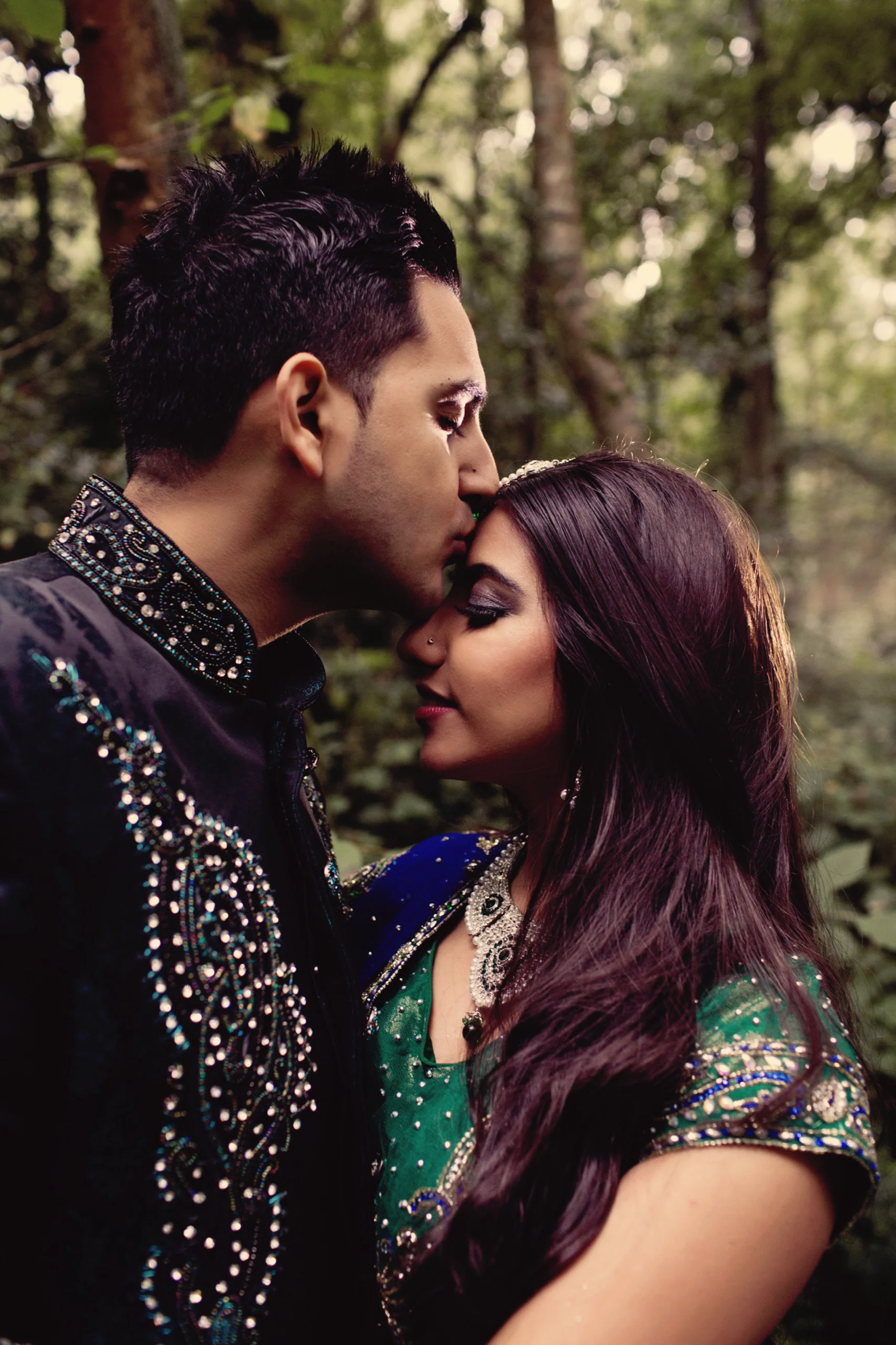
The moments to plan for at a Hindu wedding are the haldi, mehndi and sangeet in the days before; the ganesh puja, the baraat and the groom’s welcome; the jaimala; then, under the mandap, the kanyadaan, the tying of the knot, the mangal pheras and saptapadi, the sindoor and mangalsutra; and finally the vidaai. The order and the names change from one family, region and priest to the next.
Below: each moment, where the camera should be, mandap lighting and working with your priest. For the whole week around it, see our multi-day Asian wedding timeline.
Does every Hindu wedding follow the same order?
No. A Gujarati wedding is not a Punjabi wedding, and a Tamil or Bengali wedding is different again. Within each, families and priests keep their own customs. These are some of the regional moments worth telling your photographer about in advance:
| Tradition | Moments to mention |
|---|---|
| Gujarati | Mandap mahurat, pithi, garba and dandiya raas, the bride’s mother welcoming the groom, the antarpat lowered before the couple see each other, the hiding of the groom’s shoes |
| Punjabi Hindu | Chooda and kalire, jaggo, the milni between the two families, the sehra |
| Tamil | The kasi yatra, the oonjal swing, the tying of the thali, often at an early-morning muhurtham |
| Bengali | Gaye holud, shubho drishti (the bride’s face revealed from behind betel leaves), saat paak, sindoor daan |
If your families come from two traditions, tell us which rituals come from which side; our page on Asian weddings shows how we cover each event. Our older post on the Hindu wedding ceremony and the saptapadi explains the meaning of the seven steps in more depth.
Before the wedding day: ganesh puja, haldi, mehndi and sangeet
Ganesh puja. Many families begin with prayers to Ganesh, often at home with close family and the priest, days before or on the wedding morning. Rooms are small and light is low, so a photographer working quietly from a corner, with no flash, is the right approach.
Haldi (or pithi). Turmeric paste, close family and a lot of laughter. Hold it in daylight, outside or by a large window, and allow about two hours.
Mehndi and sangeet. Henna, rehearsed performances and dancing, usually in the evening. We cover them in planning photo and film for the mehndi and sangeet.
The baraat and the groom’s welcome
The baraat is the groom’s arrival with his family and friends: a dhol, dancing and sometimes a horse or a vintage car. It is loud and fast, so we put one filmmaker ahead of the procession and one photographer with the groom. Our guide to planning the baraat and dhol covers routes, timings and venue rules.
At the entrance, the bride’s family welcome the groom. In many families the bride’s mother performs an aarti and applies a tilak; Punjabi families often hold a milni, the relatives of both families meeting in pairs. Give your photographer the names of the people involved, in order.
The jaimala
The couple exchange garlands, often on a stage or at the edge of the mandap, and the groom’s friends may lift him out of the bride’s reach. It is one of the most crowded moments of the day. Ask guests to stay seated, and keep a clear line between the stage and the front row so the photographer can work from the front while the filmmaker shoots wide from the side.
Under the mandap: the ceremony moments
Most of the ceremony happens in a small space around the sacred fire. These are the moments families most often ask us not to miss.
| Moment | What happens | Where we usually are |
|---|---|---|
| Opening prayers | The priest begins with prayers, often to Ganesh, and the havan is lit | One filmmaker wide from the front side; photographer low at the edge |
| Kanyadaan | The bride’s parents give her hand in marriage | Photographer facing the parents, to see their faces |
| Hasta milap and granthi bandhan | The couple’s hands are joined and their garments tied together | Close, from the side |
| Mangal pheras | The couple walk around the sacred fire; four rounds in many Gujarati ceremonies, seven in many others | Photographer moving around the outside edge; filmmaker wide plus one close camera |
| Saptapadi | The seven steps, each with its vow, sometimes combined with the pheras | Low and wide, to show the steps |
| Sindoor and mangalsutra | The groom places sindoor in the bride’s parting and ties the mangalsutra | Close, at the front corner |
| Aashirvad | Elders bless the couple, often with rice or petals | From behind the couple, to see the elders’ faces |
Plan film coverage for the whole ceremony, however long it runs: the full edit is the one grandparents watch most.
How should the mandap be lit?
The mandap is usually the most decorated part of the room, and the hardest to light. A few requests to your decorator and venue make a real difference:
- Warm, even light on the front and sides of the mandap, not just coloured uplighters behind it. Purple and blue light on skin is very hard to correct.
- No bright windows directly behind the mandap for a daytime ceremony. If the venue has one, ask for it to be screened.
- A walkway around the mandap, about a metre wide, so the crew can move without stepping onto it or blocking the front row.
- Agreed seating on the mandap. Tell us which family members sit on it and where, so we keep a clear view of the couple.
Ask the venue about its rules on the sacred fire early: some limit the size of the havan, and smoke alarms near the mandap need planning. Our films are shot on cinema cameras that handle low light and firelight well, so reds, golds and the glow of the fire look true on screen. Our Hindu wedding films page has examples, including our Hindu wedding in Cheshire.
Working with your priest
The priest leads the ceremony, so we plan our coverage around them, not the other way round.
- Ask for the order of service with rough timings, and the names of the rituals as your priest uses them.
- Ask where the crew may stand, and whether they may step onto the edge of the mandap. Many priests ask that shoes come off on the mandap.
- Sound. If the priest uses a microphone through the venue’s speakers, we ask for an audio feed or place a small recorder nearby. Priests who explain each ritual in English give your film a narration your guests can follow.
- A signal before the key moments. A nod before the pheras and the sindoor is all we need.
- The muhurat. If the ceremony is timed to an auspicious moment, tell us. A late baraat compresses everything after it.
In mandirs, follow the temple’s rules too: shoes off, and the crew stays out of the shrine. Remember that a Hindu ceremony at a hotel or banqueting hall is not legally binding in England and Wales, so many couples hold a civil ceremony as well, as explained in GOV.UK’s guidance on planning your ceremony. If that falls on the same day, our guide to fusion weddings with two ceremonies shows how to fit both in.
Family photographs
Hindu weddings often have very large families, and everyone wants a photograph with the couple. The best time is straight after the aashirvad, on or beside the mandap, before the vidaai. A list grouped by household, with a relative who knows everyone calling each group, keeps it moving: see how to plan your family photo list.
The vidaai
The vidaai is the bride’s farewell to her family: tears, a handful of rice thrown back over her shoulder, and a great deal of love. It is often the most emotional moment of the day, and it moves quickly. We put both crews on it, one with the bride and one on her parents.
If the vidaai is outside the venue after dark, which is common in winter when London sunsets come around 15:50 to 16:20, tell us where it will happen so we can light the doorway softly.
From behind the camera
The best Hindu ceremony coverage starts with a five-minute conversation with the priest on the morning. I introduce myself, ask where they would like us, and check the moments the family has told us matter most. A short, respectful hello changes how the whole ceremony feels for everyone.
The other thing I ask every couple is who will be closest to the fire. Brothers helping with the laja homa, a sister holding the knot, a grandmother on the edge of the mandap: those faces tell the story as much as the couple’s, and we can only frame them if we know where they will be.
Frequently asked questions
How long is a Hindu wedding ceremony?
It depends on the family, the tradition and the priest. Most of the Hindu ceremonies we photograph run from about an hour to several hours, not counting the baraat and the jaimala before them. Ask your priest for the order of service with rough timings, and share it with your photographer and filmmaker.
Is a Hindu wedding legally binding in the UK?
Only if it takes place in a building registered for marriages, with an authorised person or a registrar present. Some mandirs are registered, but a Hindu ceremony at a hotel or banqueting hall is not legally binding, so most couples also hold a civil ceremony, often days or weeks before. Check with your local register office.
Can you photograph inside a mandir?
Usually, yes, within the temple’s own rules. Most mandirs ask everyone to remove their shoes, and photographers keep out of the shrine and follow the priest’s guidance on where to stand. Ask the temple when you book, and pass the answer to your photographer and filmmaker before the day.
What should be on a Hindu wedding shot list?
The rituals your family holds, in order, with the names of the people in each: who performs the kanyadaan, who ties the granthi bandhan, which brothers help in the pheras or the laja homa. Add your family groups by household and any moments that are private. Your photographer will cover the rest as it happens.
Keep reading
- Multi-day Asian wedding timeline: how the haldi, mehndi, sangeet and reception fit around the ceremony.
- Mehndi and sangeet photography: planning light and coverage for the nights before.
- Baraat and dhol: getting the groom’s arrival filmed well and safely.
Planning your mandap ceremony? Tell us your priest’s order of service and we will plan the coverage with you.