The best wedding day tips for brides are simple: eat, be ready 30 minutes early, hand every job to someone else, and slow down at the moments that matter. Most of what goes wrong on a wedding morning is small, and nearly all of it can be prevented the week before.
These tips come from more than a decade of photographing and filming brides on the day, from register office mornings to three-day Asian weddings. They cover the morning, your outfit and shoes, food, timing, delegating, being present and what to tell your photographer. For everything that comes earlier, see our month-by-month wedding planning checklist.
What should a bride do the night before the wedding?
- Lay everything out. Outfit, shoes, jewellery, underwear, the rings if you are holding them, letters or gifts. Put it all in one place, ideally in the room you will get ready in.
- Hand over the jobs. Rings, readings, payments, the order of service and the emergency kit should be with the people who need them by tonight. Our wedding day emergency kit list covers what to pack and who should carry it.
- Write a note, if you want to. A letter to your partner, read the next morning, often becomes one of the quieter moments of the day.
- Go easy. A late night or a heavy drink the evening before shows on camera, and you will feel it by the speeches.
What to do on the wedding morning
Do: eat, and keep eating
Have a proper breakfast, even if your stomach is not keen. Ask a friend to order easy food to the room around midday, and keep a bottle of water within reach. Champagne on an empty stomach is the reason some brides feel faint by the ceremony.
Do: get ready by a window
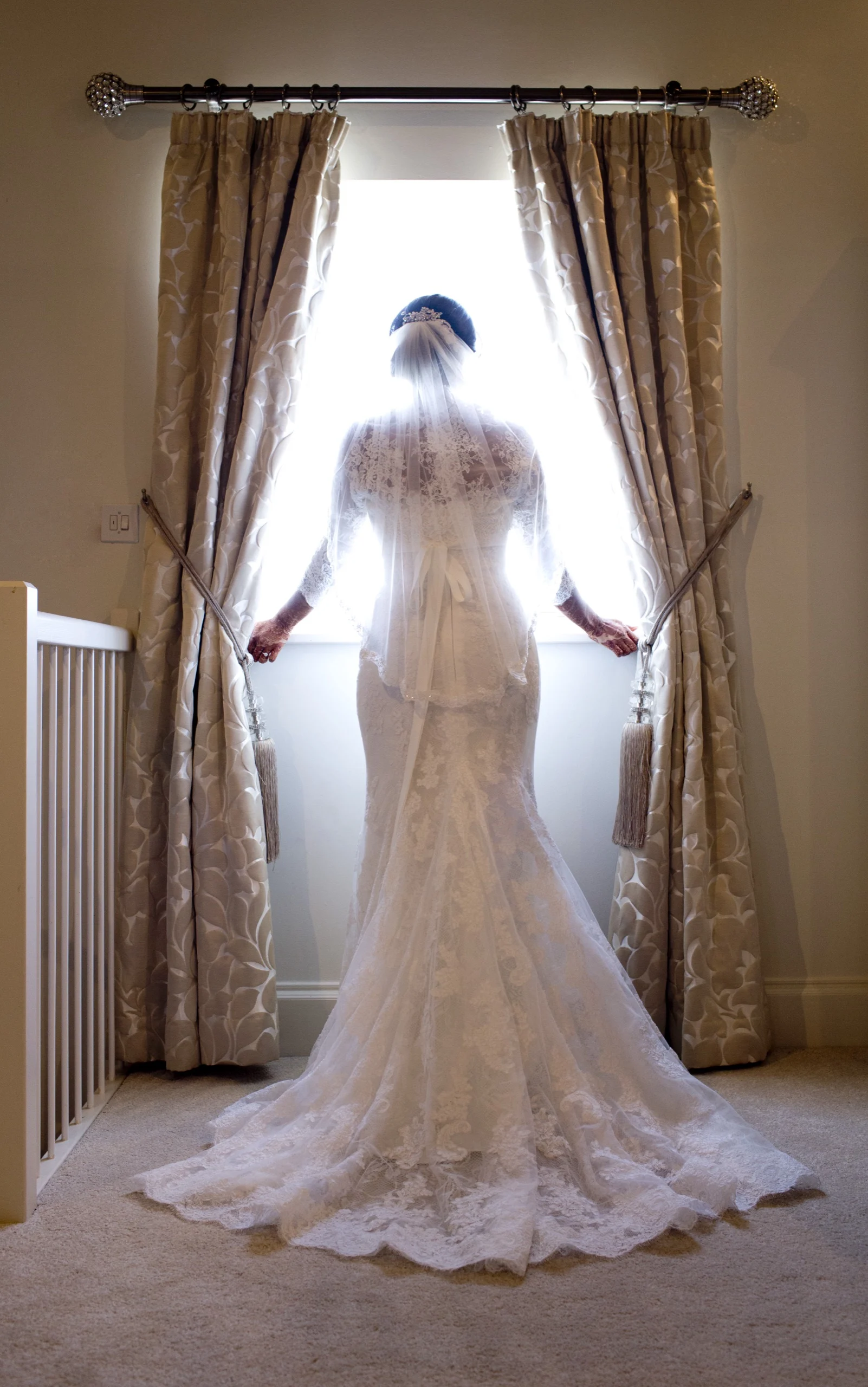
Do your make-up facing a large window. Daylight is kinder than any lamp, and your make-up will look the same in photographs as it does in the mirror. Move suitcases, bags and bottles out of sight. Our guide to getting-ready photos has more on choosing the room.
Don’t: go last in the hair and make-up chair
Go second to last, so there is time for touch-ups if anyone overruns. Wear a button-up shirt or a robe so you can change without touching your hair.
Don’t: try to run the morning
If suppliers are calling you, you are not getting ready. Give your phone to one calm friend, along with the running order and a contact sheet.
Your dress, lehenga or saree: what to know
- Practise the difficult parts. If your dress has a bustle, show the person who will fasten it how it works a week before, not five minutes before the first dance. If you are wearing a lehenga or saree, practise walking, sitting and climbing steps in it.
- Plan the dressing time. A gown with buttons takes 10 to 15 minutes to fasten properly. A bridal lehenga with jewellery and a pinned dupatta can take much longer, so allow for it. Our Asian bride’s getting-ready checklist goes into the detail.
- Decide who looks after your train or dupatta. One person, briefed, who straightens it before the aisle and the portraits.
- Steam it the day before. Creases show on camera far more than they do in the mirror.
Shoes: what every bride wishes she had known
- Wear them in. Walk around the house in them for a few evenings before the wedding, with socks if needed.
- Bring a second pair. Flats or trainers for the evening. Nobody looks at your feet on the dance floor.
- Think about the ground. Stiletto heels sink into lawns. Heel stoppers help, or choose a block heel for outdoor portraits.
- Barefoot ceremonies. At a gurdwara, mandir or mosque, shoes come off at the entrance. Your feet will be in photographs, so plan your henna, pedicure and any anklets with that in mind.
How to stay on time on your wedding day
Aim to be fully dressed, with nothing left to do, at least 30 minutes before you need to leave. That half-hour absorbs every small delay and gives you time for a few portraits and a moment with your family.
| Ceremony time | Fully ready by | Photographer arrives |
|---|---|---|
| 11:00 (20 min drive) | 10:00 | About 08:30 |
| 13:00 (20 min drive) | 12:00 | About 10:30 |
| 15:00 (20 min drive) | 14:00 | About 12:30 |
Add more time for a longer drive, traffic or a heavy outfit. Our sample wedding day timelines show how the rest of the day fits around these times.
What to delegate, and to whom
- A day-of contact. One person, not you, who answers supplier calls.
- A family caller. A confident relative who knows faces, to gather people for group photos from your list. See how to plan your family photo list.
- A keeper of things. Someone with the emergency kit, your lipstick, tissues, a phone charger and your evening shoes.
- A timekeeper. Someone who nudges everyone gently when it is time to move.
Moments to savour, and how to be in them
The day goes very fast. These are the moments worth slowing down for.
- The top of the aisle. Pause for a breath before you start walking. Then walk slowly, and look at your partner rather than the floor.
- The ceremony itself. Listen to the words. Look at your partner when they speak.
- The first few minutes after. Ask for five minutes alone together before the congratulations start. It is often the only quiet moment of the day.
- The speeches. Look around the room while people speak. Your reactions, and your guests’, are some of the best photographs of the day.
- A step outside at golden hour. In June and July the softest light starts around 20:15 to 20:30 in London, during or after dinner. Ten minutes outside with your photographer is worth it.
Don’t: perform for the camera
You booked your photographer and filmmaker because you liked their work. Forget about where they are and spend the day with the people you love. If you are worried about how you look in photos, our guide for camera-shy couples helps.
What to tell your photographer and filmmaker
A few weeks before the day, send:
- The running order, with addresses and timings.
- The family photo list, with names.
- Who matters most to you, and why: a grandparent, a godparent, a friend who has travelled far.
- Family situations to handle carefully, such as separated parents or someone who is unwell.
- Heirlooms and details with a story: a ring, a watch, a piece of jewellery, a letter.
- Anything to leave out of your portfolio or social media.
- Anything you feel self-conscious about. We would rather know.
Our wedding photography page explains how we cover the day from preparations to the first dance, and our Asian weddings page covers multi-day celebrations.
From behind the camera
From where we stand, the brides who look most relaxed in their photographs are rarely the ones whose mornings ran perfectly. They are the ones who had stopped checking. Somebody else had the phone, somebody else knew where the rings were, and the bride was simply talking to her mother by the window. That ease shows on camera, in stills and on film, in a way posing never does.
We would also gently say: eat. Some of the most tired faces we see at speeches belong to brides who had nothing since breakfast.
Frequently asked questions
How long before the ceremony should a bride be ready?
Aim to be fully dressed, with hair and make-up finished, at least 30 minutes before you need to leave for the ceremony. That half-hour covers touch-ups, a few portraits, time with family and anything that has run late. For heavy bridal outfits with jewellery and a pinned dupatta, allow 45 minutes to an hour.
What should a bride eat on her wedding day?
Eat a proper breakfast, even if you are nervous, and ask someone to bring easy food to the getting-ready room around midday: sandwiches, fruit, something you can eat with a fork. Keep water close all morning. In our experience many brides barely touch the wedding breakfast, so the earlier meals matter more than you think.
What should I tell my wedding photographer before the day?
Tell them who matters most and why, any family situations to handle carefully, heirlooms or details with a story, moments you want kept private, and anything you feel self-conscious about. Send the running order and family photo list a few weeks before. A good photographer already knows to capture the rings and the kiss; they cannot know your history.
How can I enjoy my wedding day and not feel rushed?
Hand every job to someone else by the night before, give your phone to a friend, and build buffers of 10 to 15 minutes into the running order. Then take small pauses on purpose: at the top of the aisle, after the ceremony with your partner, and during the speeches, when you can look around the room.
Keep reading
- Wedding day tips for grooms: the same advice from the other side of the aisle.
- Your wedding morning and getting-ready photos: how to choose the room and plan the light.
- 21 wedding planning mistakes we see: the small things that are easy to fix in advance.
If you would like to talk through your own morning and how it fits the day, book a call with us.