A good baraat needs four decisions made weeks ahead: how the groom arrives, who plays, where the procession is allowed to go, and how long it really takes. Make those early and the baraat becomes one of the most joyful parts of the wedding on camera. Leave them to the morning and it becomes a crowd in a car park.
This guide covers horse, car or on foot, dhol players, venue and council permissions, timing and safety, where your photographer and filmmaker stand, and the milni or welcome that follows. It is one chapter of our Asian wedding timeline guide, which shows where the baraat sits in a full wedding day.
What is a baraat?
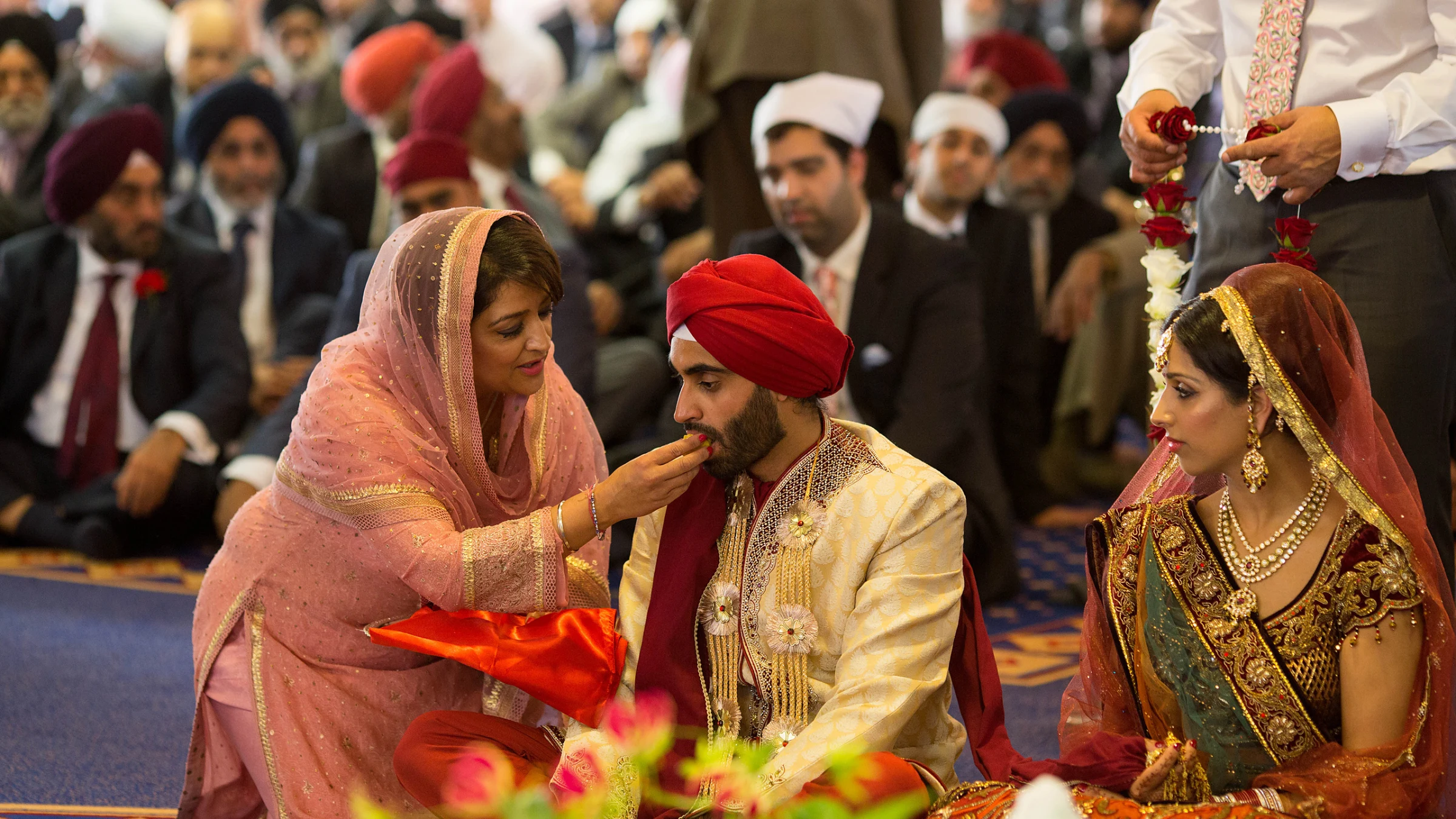
The baraat is the groom’s wedding procession: his family and friends dancing him to the ceremony, usually with a dhol leading the way. In Hindu weddings, the bride’s family welcomes the baraat at the venue, often with an aarti and garlands. In Sikh weddings, the procession arrives at the gurdwara for the milni, where the two families meet and the relatives embrace and exchange garlands. Punjabi, Gujarati, Tamil and Muslim families each have their own version, and every family adds its own touches, so tell your photographer how yours runs.
Horse, car or on foot?
| Arrival | Works well when | Plan for | On camera |
|---|---|---|---|
| Horse | There is a long, safe approach inside the venue grounds | A professional handler, the venue’s agreement, space to mount and dismount, calm away from the dhol at first | Height, movement and the groom above the crowd: the classic baraat image |
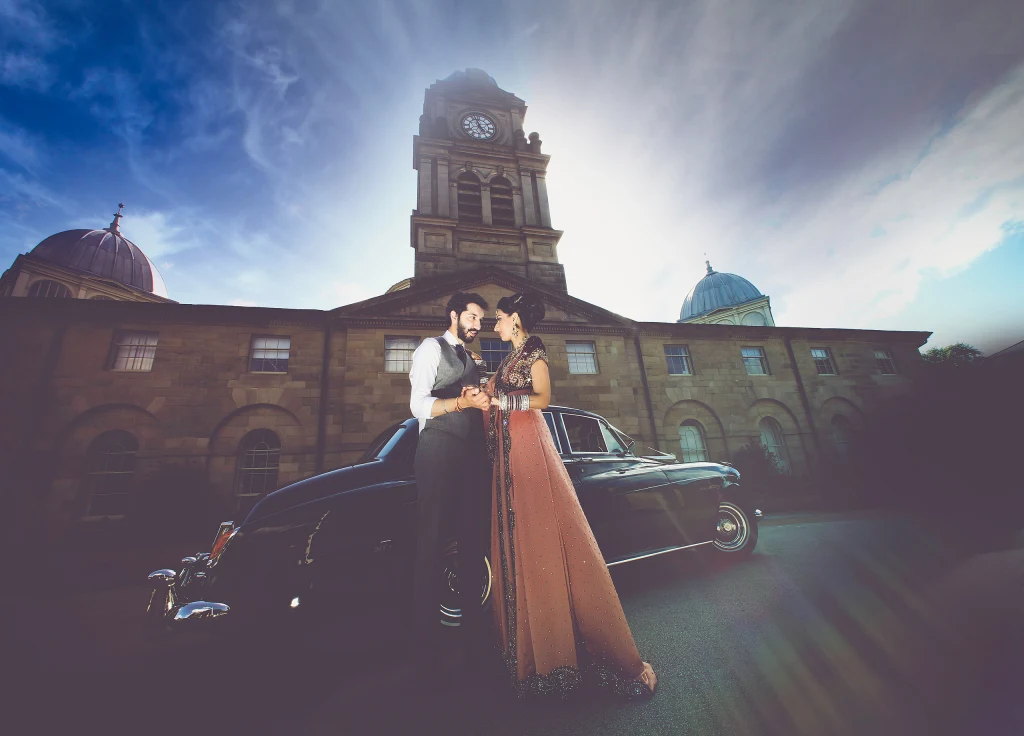
| Car | The route is long, the venue is in town, or the weather is poor | A parking spot near the entrance, a short walk at the end with the dhol | The car arriving, then the groom stepping out into the dancing |
| On foot | The family is gathering close to the venue | A clear walking route and a meeting point | Everyone at the same level, so faces and dancing are easy to photograph |
Many grooms combine them: arrive by car to a meeting point, then walk or ride the last stretch with the dhol. Whatever you choose, keep it inside the venue’s grounds where you can. It is safer, it is easier to get permission, and the background looks better in the film than a main road.
Dhol players: what to agree in advance
The dhol is the heartbeat of the baraat, and it is loud. Agree these with your players before the day:
- Start and finish points. Tell them exactly where the procession begins and where it stops.
- Duration. Most baraats need 20 to 45 minutes of playing, plus a few minutes for the welcome.
- When to stop. The players should stop at the door, or wherever your venue or place of worship asks. Ask the gurdwara committee or temple whether music is welcome on the approach.
- The horse. If there is a horse, the handler should agree how close the dhol can play.
- Arrival time. Ask them to arrive 30 minutes early, so the procession starts on time.
Do you need permission for a baraat?
Yes, from your venue at the very least. Venues often have their own rules on horses, music outside, routes across car parks and lawns, and the time of day. If the procession will use a public road or pavement, close a route, or be loud near homes, check with your venue and your local council well before the day. Rules differ between councils and between venues, so we will not guess them here: ask both early, before you pay deposits for a horse or players.
Two practical points: tell the venue the expected number of people in the procession, and ask whether neighbours or other events on site need to know.
Timing the baraat
The baraat almost always runs longer than the plan. Families gather slowly, the dancing finds its own pace, and nobody wants to be the one who stops it. Build the schedule backwards from the time the ceremony must start.
| Time | What happens | Where the camera team is |
|---|---|---|
| 9.15am | Groom’s family gathers at the meeting point; dhol players arrive | Filmmaker with the groom; photographer on the gathering |
| 9.45am | Baraat sets off | One ahead of the groom, one at the door |
| 10.15am | Arrival; the bride’s family welcomes the baraat | Both at the door |
| 10.30am | Milni or welcome rituals | Close to the families, at the side |
| 10.45am | Everyone moves inside; ceremony begins at 11.00am | Ready in the ceremony position |
This is a morning example, typical of a Sikh wedding where the Anand Karaj starts in the late morning. For an afternoon Hindu ceremony, move the whole block later and keep the same gaps. For more on how this fits the rest of the day, see our Sikh wedding day timeline and the Hindu wedding moments to plan for.
Keeping the baraat safe
- Horse: a professional handler stays with the horse throughout; children stay well back; nobody throws money, confetti or fireworks near it.
- Traffic: keep the procession off roads wherever possible. If it must cross one, follow what your venue and council have agreed.
- Crowds: appoint two or three relatives as stewards to keep the route clear and bring elders to the welcome point before the crowd arrives.
- Weather: have a wet plan, such as a shorter route or arriving under a canopy. The music matters more than the distance.
- Hearing: the dhol is very loud close up, so give older relatives and small children room at the side.
Where the photographer and filmmaker stand
The baraat moves, so position matters more here than anywhere else in the day.
- Ahead of the groom. One of us walks backwards in front of him, for his face and the dancing around him. A clear path helps.
- At the destination. The other waits at the door, so the arrival, the welcome and the first look between the families are covered from the front.
- Height, if possible. A step, a low wall or a balcony at the venue gives a wide frame of the whole procession. Tell us if there is one.
- Drone: aerials are possible only where the venue and airspace allow. Our guide to drone wedding filming explains the checks we make.
For film, the dhol overwhelms most microphones, so we record it from a distance and capture close sound separately. Speeches or blessings at the door need a quieter moment, so ask the dhol to pause for them.
The milni after the baraat
The milni is where the baraat ends and the families formally meet. In Sikh weddings, relatives of the same standing on each side, often the fathers first, then uncles and brothers, embrace and exchange garlands, with the granthi or a family elder calling the pairs. In many Hindu weddings, the welcome includes the bride’s mother greeting the groom with an aarti, and some Punjabi Hindu families hold a milni too.
To photograph it well:
- Give us the list of pairs in order, with names, so the person calling them can keep it moving.
- Keep a space in front of the families clear of phones and guests.
- Allow ten to fifteen minutes. A long milni list takes longer than you expect, especially when an uncle is lifted off the ground.
Our older post on Sikh wedding ceremony traditions explains the meaning behind the milni and the Anand Karaj.
From behind the camera
The baraat is the one part of the day where the groom forgets about the camera completely, and that is why it photographs so well. The thing that most often goes wrong is not the weather or the horse but the timing: a procession that starts 40 minutes late compresses everything after it, including the milni and the ceremony. I always ask who in the family has the authority to say “time to go”, and I introduce myself to that person before the dhol starts. On film, the best baraat footage comes from the quiet moment before it begins: the groom being dressed, his turban tied, his father fixing the sehra. Book coverage to start there, not at the first beat of the drum.
Frequently asked questions
How long does a baraat take?
The procession itself usually takes 20 to 45 minutes, depending on the distance and how long the dancing lasts. Add time for the groom’s party to gather beforehand and for the welcome and milni at the end. For planning, allow about an hour from the first beat of the dhol to the families meeting at the door.
Do you need permission for a baraat in the UK?
Start with your venue: many have rules on horses, music, routes and where the procession may go. If the baraat will use a public road or pavement, or might be loud near homes, check with your local council as well. Rules differ from place to place, so ask both early, before you book a horse or dhol players.
Should the baraat have a horse or a car?
It depends on the route and the venue. A horse is traditional and looks wonderful on camera, but needs a handler, space, a calm route and the venue’s agreement. A car suits longer distances, tight town-centre venues and winter weather. Many grooms arrive by car and finish the last stretch on foot with the dhol.
Where should the photographer stand during the baraat?
Ahead of the groom, walking backwards, for the faces and the dancing, with a second camera wide or at the destination for the arrival. With one photographer and one filmmaker, we split: one leads the procession, the other waits at the door for the welcome and the milni, so neither moment is missed.
Keep reading
- Mehndi and sangeet: planning photo and film for the night before: the evening before the baraat, and how to light it.
- What does photo and film cost for a multi-day Asian wedding?: how event-by-event pricing works, baraat included.
- Photographing and filming in a gurdwara: what happens once the baraat reaches the door.
Planning your baraat?
We have walked backwards in front of a lot of grooms. See how we cover Asian weddings and Sikh wedding films, or check your date.