In London, the sun sets around 3.50pm in mid-December and usable light is gone by about 4.30pm, so a winter wedding needs a different timeline from a summer one. Hold the ceremony late morning or early afternoon, finish by about 2pm, and do family photos and portraits straight away. This guide covers the light from October to March, a sample December timeline, how winter looks on camera and on film, the cold and the rain, and why winter can be the better choice.
The short answer: From November to January, sunset in London falls between about 3.50pm and 4.35pm. Finish your ceremony by 2pm to 2.30pm, photograph family groups and portraits straight after, and save the candlelit evening for dinner, speeches and dancing.
Winter is where the sample summer timeline breaks. If you are still choosing a ceremony time, start with our wedding day timeline with sample schedules, then come back here to adjust it for the light.
What time does it get dark for a winter wedding?
Earlier than most couples expect, and the clocks make it sudden. These times are for London, rounded to the nearest five minutes and calculated with the NOAA solar position method; they agree with sunrise-sunset.org to within a couple of minutes. Beckenham and north-west Kent are within about a minute.
| Date | Golden light starts | Sunset | Last usable light | Finish the ceremony by about |
|---|---|---|---|---|
| 1 October | 5.55pm | 6.40pm | 7.10pm | 5.00pm |
| 15 October | 5.20pm | 6.10pm | 6.40pm | 4.30pm |
| 1 November | 3.45pm | 4.35pm | 5.10pm | 2.45pm |
| 15 November | 3.20pm | 4.10pm | 4.50pm | 2.30pm |
| 1 December | 2.55pm | 3.55pm | 4.35pm | 2.00pm |
| 15 December | 2.50pm | 3.50pm | 4.30pm | 2.00pm |
| 1 January | 3.00pm | 4.00pm | 4.40pm | 2.15pm |
| 15 January | 3.25pm | 4.20pm | 5.00pm | 2.30pm |
| 1 February | 4.00pm | 4.50pm | 5.25pm | 3.00pm |
| 15 February | 4.25pm | 5.15pm | 5.50pm | 3.30pm |
| 1 March | 4.55pm | 5.40pm | 6.15pm | 4.00pm |
| 15 March | 5.20pm | 6.05pm | 6.40pm | 4.15pm |
“Last usable light” is civil dusk, when the sun is six degrees below the horizon. The last column is our own planning rule: finish the ceremony about 1 hour 45 minutes before sunset, which leaves time for confetti, family photos and a short set of portraits while there is still daylight.
The earliest sunsets fall around 10 to 14 December, before the shortest day, and the evenings get lighter from there. Watch the clocks too: according to GOV.UK they go back on 31 October 2027 and 29 October 2028, and sunset jumps an hour earlier overnight. A late-October wedding and an early-November one are different days.
What time should a winter wedding ceremony be?
For December and January, we suggest a ceremony at 11am, noon or 1pm, finishing by about 2pm to 2.30pm. In November and February you can push it half an hour to an hour later.
If a later ceremony is fixed, for example by a church, a registrar’s availability or a religious calendar, you still have options:
- A first look. See each other privately before the ceremony and do your portraits in daylight. Our guide to whether a first look is right for you weighs it up.
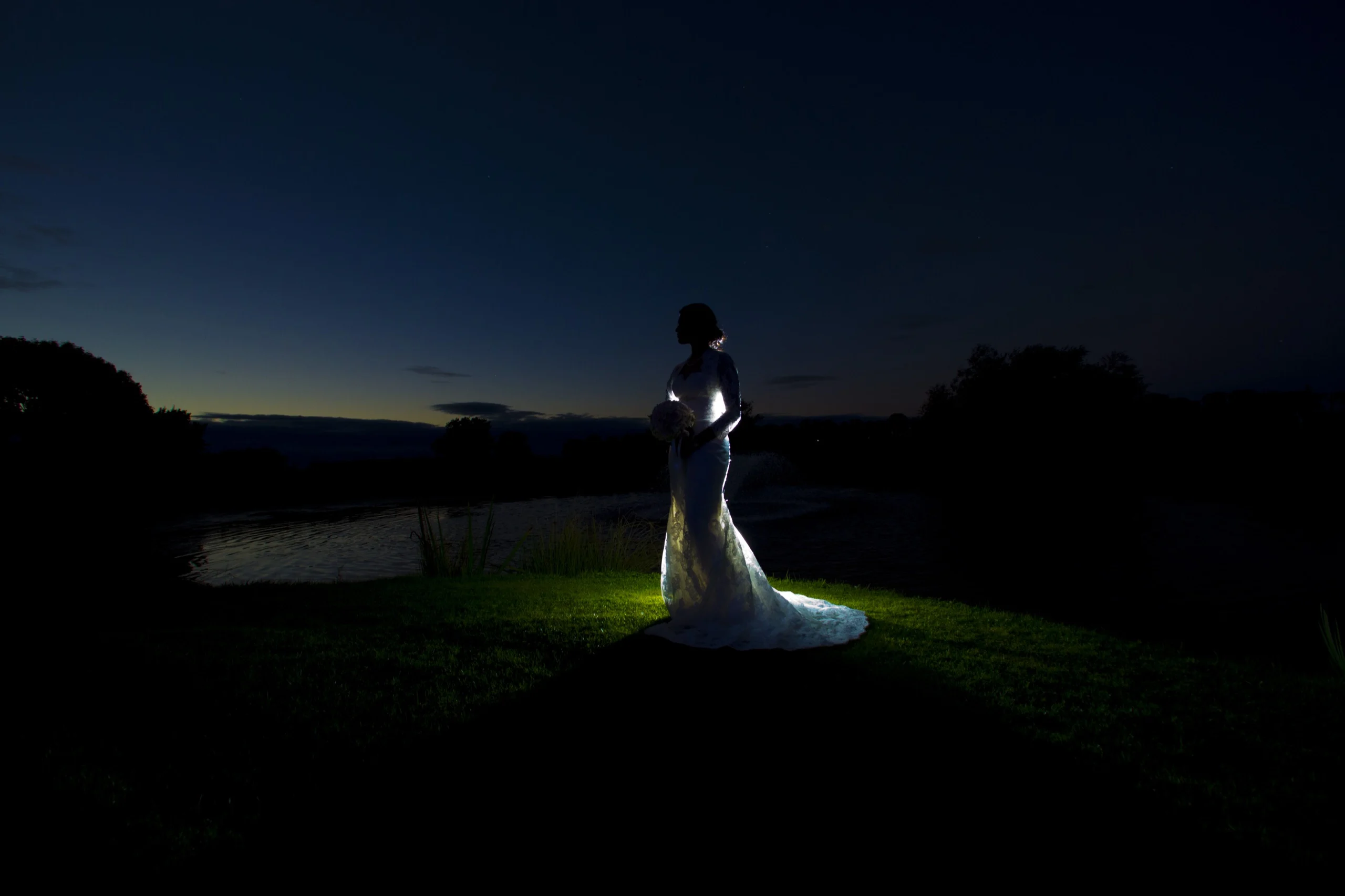
- Blue hour and night portraits. Ten minutes outside with the venue lit behind you, or on a London street under the lamps.
- Indoor portraits by a window or a fire. Planned in advance, they can be some of the warmest pictures of the day.
A sample December wedding timeline
This is a 12 noon ceremony in mid-December, with sunset around 3.50pm.
| Time | What happens | Photo and film notes |
|---|---|---|
| 8.00am | Hair and make-up begins | By the biggest window available |
| 9.45am | Photographer and filmmaker arrive | Details and preparations in soft winter light |
| 11.15am | Getting dressed | |
| 11.30am | Guests arrive | Microphones fitted for the ceremony |
| 12.00pm | Ceremony | No flash during the service |
| 12.40pm | Confetti and congratulations | Outside if dry, in a covered porch or doorway if not |
| 12.50pm | Family photographs | Outside in daylight, or the indoor spot agreed in advance |
| 1.20pm | Couple portraits | 15 to 20 minutes while the light is good |
| 1.45pm | Room photos | Candles lit, before guests come in |
| 2.00pm | Guests seated; speeches before the meal | |
| 2.45pm | Wedding breakfast | |
| 3.00pm | Golden light: slip out for 10 minutes between courses | Sun is low and warm from about 2.50pm |
| 3.55pm | Optional blue-hour portraits with the venue lit behind you | 5 to 10 minutes |
| 5.00pm | Cake cutting | |
| 6.30pm | Evening guests arrive | |
| 7.00pm | First dance | |
| 7.30pm | Dance floor | Coverage often ends around here |
With nothing left to squeeze into daylight, the evening runs at its own pace. Our month-by-month guide to golden hour wedding photos in the UK shows how the same day shifts in other months.
Candlelight and low light: how winter looks on camera and on film
Winter interiors are darker, and churches and older venues can be very dark on a December afternoon. Two rules shape how we work.
First, we never use flash during a ceremony. Instead we use fast lenses and cameras that handle low light well, and we agree positions with the officiant in advance. If you are marrying in church, our guide to church wedding photography and filming rules explains what to ask the vicar.
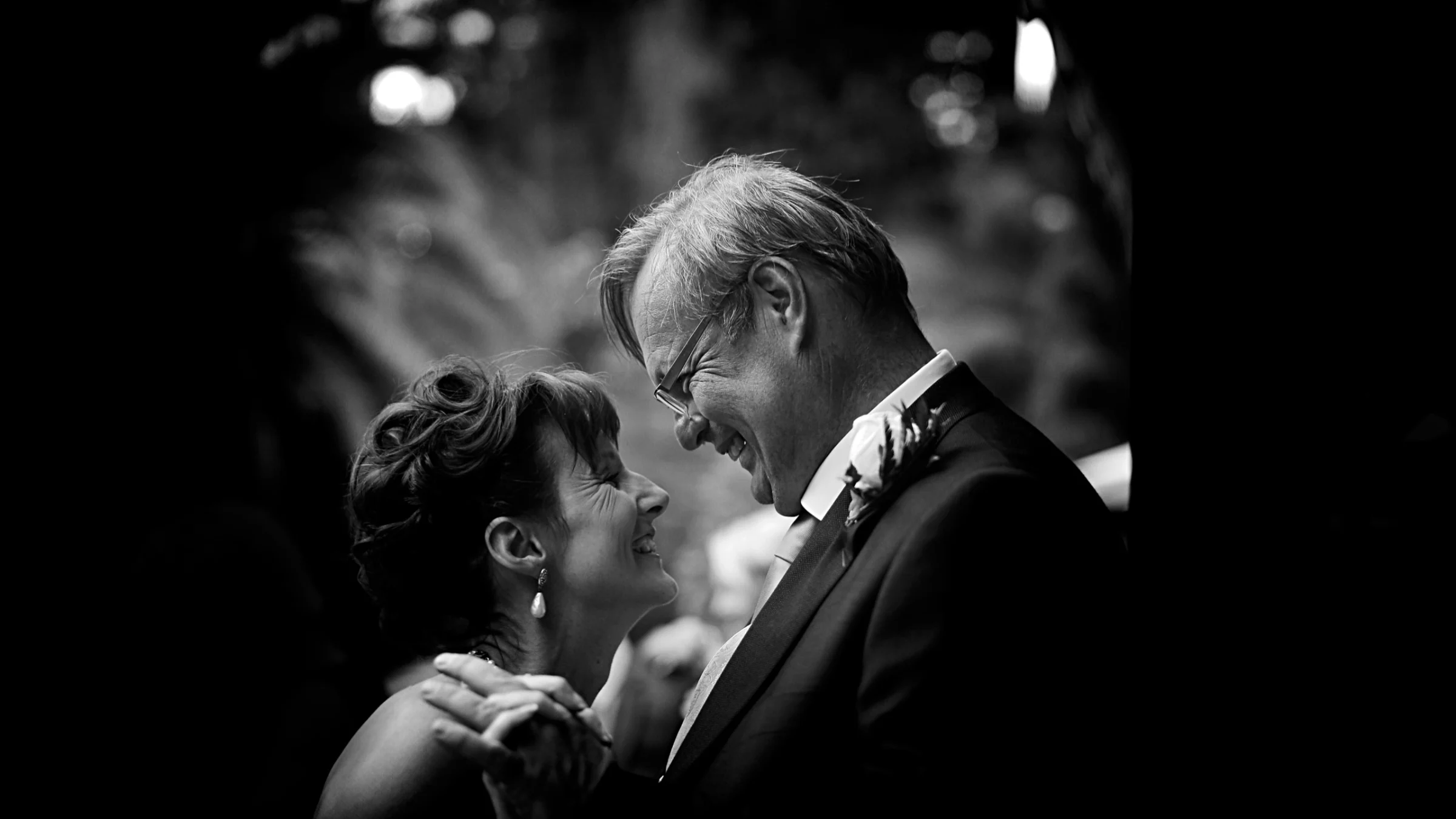
Second, in the evening we add light quietly. A small, soft light, placed with care, keeps faces natural without the flat, flashed look. For film, we shoot on cinema cameras that cope well with low light, so candles, fires and festoon lights look warm on screen rather than grainy or orange.
You can help a lot with the room itself:
- Ask for candles, warm white festoon lights and an open fire if the venue has one. They light faces and look good on camera.
- Avoid bright overhead lighting and colour-changing uplighters where you can. Mixed colours are hard to correct and turn skin tones odd.
- Ask for the speeches to be lit. A dim corner works for dinner, not for the best man’s speech on film.
You can see how we film the whole day on our wedding films page.
Cold, rain and the practical side
In London, December averages about 11 days with at least 1mm of rain, highs of around 9°C and only about 55 hours of sunshine for the whole month, according to Met Office 1991 to 2020 averages for Heathrow. October and November are the wettest months by rainfall. So plan for weather, and treat anything better as a bonus.
- Agree an indoor spot for family photos with your venue, with space for your biggest group.
- Keep a few clear umbrellas by the door. They make good portraits and keep hair dry.
- Bring a warm layer for outdoor portraits: a coat, a wrap or a faux-fur stole.
- Allow extra travel time around Christmas and New Year, when public transport runs reduced timetables.
Two things only a photo and film team notices: lenses fog when they come in from the cold into a warm room, and batteries drain faster in the cold. We bring kit inside a few minutes early to settle and carry spares. And for film, coats rustle against microphones, so we fit the vows microphone with that in mind. Our full wet-weather photo and film plan covers rain in more detail.
The upside: why winter can be the better choice
Winter dates usually cost less. The Bridebook UK Wedding Report 2026 puts the average January wedding at £11,000, against £23,809 in June, with February and October also among the cheapest months. The same report finds that August, May and September are the most popular months, so winter dates are easier to secure, often at shorter notice.
Many venues offer off-peak rates from November to March, and we price winter and Monday to Thursday weddings lower too. See our winter weddings for how we cover them, and our guide to spending less on photo and film without regretting it for more ways to make a budget go further.
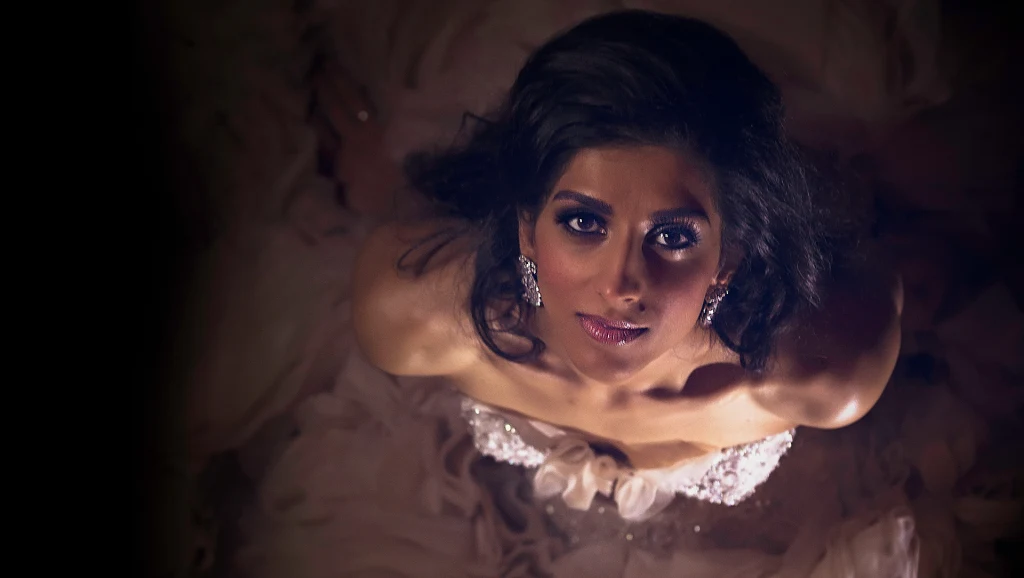
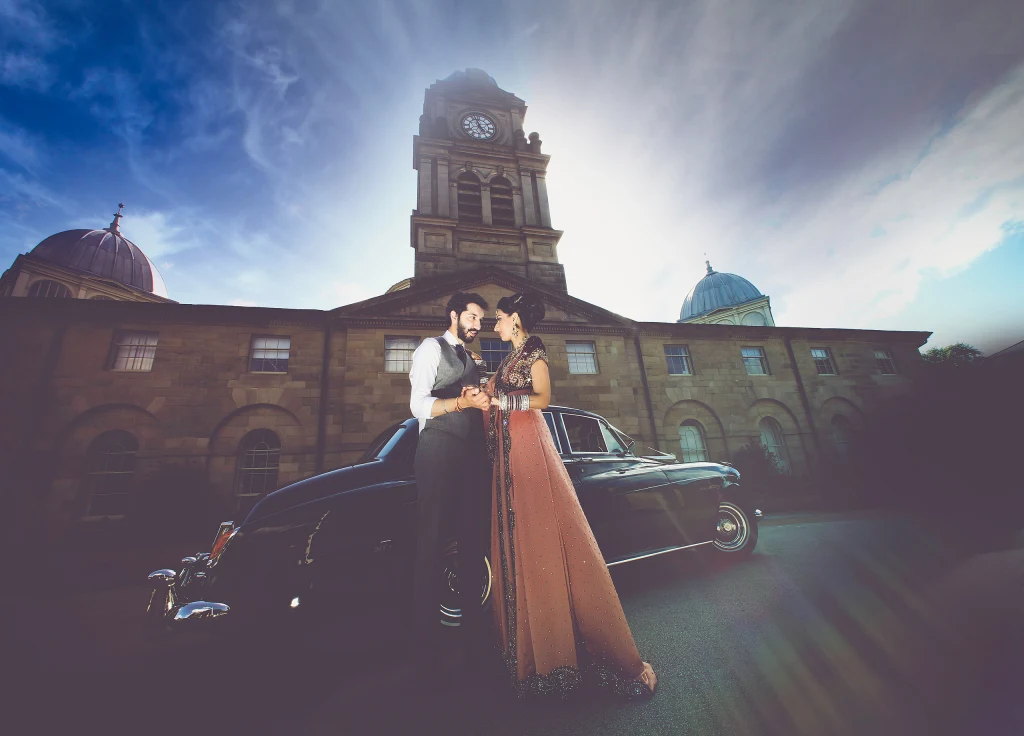
The light helps, too. The sun stays low all day in midwinter, so the light is soft from late morning, and golden hour falls in the middle of the afternoon instead of during the party.
From behind the camera
What makes a winter day work is accepting the light rather than fighting it. Couples who plan the ceremony for midday and do family photos straight after rarely feel rushed. Couples who keep a summer timeline with a 3pm ceremony often walk out into darkness, and then the portraits happen under a porch light. I always ask for the ceremony time first when someone mentions a winter date, and if it is late, we plan the portraits before it.
A tip for big families: in winter, keep the family list short and run it as fast as you can, because every five minutes is daylight. Our guide to planning your family photo list shows how to do ten groups in about 30 minutes.
FAQs
What time is sunset for a winter wedding, and will it be dark for photos? In London, sunset is around 4.35pm on 1 November, around 3.50pm in mid-December and around 4.20pm by mid-January. Usable light lasts about 40 minutes after sunset. So yes, it is dark by about half past four in December, but a ceremony that finishes by 2pm leaves enough daylight for family photos and portraits.
What time should a winter wedding ceremony be? For daylight portraits in December and January, aim for a ceremony that finishes by about 2pm to 2.30pm, which usually means starting at 11am, noon or 1pm. In November and February you have a little longer. If you want a later ceremony, consider a first look and portraits before it.
Are winter weddings cheaper? Usually. The Bridebook UK Wedding Report 2026 puts the average January wedding at £11,000, against £23,809 in June. Many venues offer off-peak rates from November to March, and photographers often do too. We price winter and Monday to Thursday weddings lower, so get a price for your date to compare.
Will our evening photos be dark? No. A good photographer brings quiet, flattering light for the evening, and modern cinema cameras handle candlelight well, so the room looks as warm as it felt. Help by asking your venue for candles, warm festoon lights and an open fire if there is one, rather than bright overhead lighting.
Keep reading
- Golden hour wedding photos in the UK, month by month: the full year of sunset and golden hour times.
- Wedding day timeline UK: the 11am sample day works well in winter.
- Rain on your wedding day: a photo and film plan for the wettest months.
Winter dates are easier to secure and cost less. Get a price for your winter date and see what it includes.