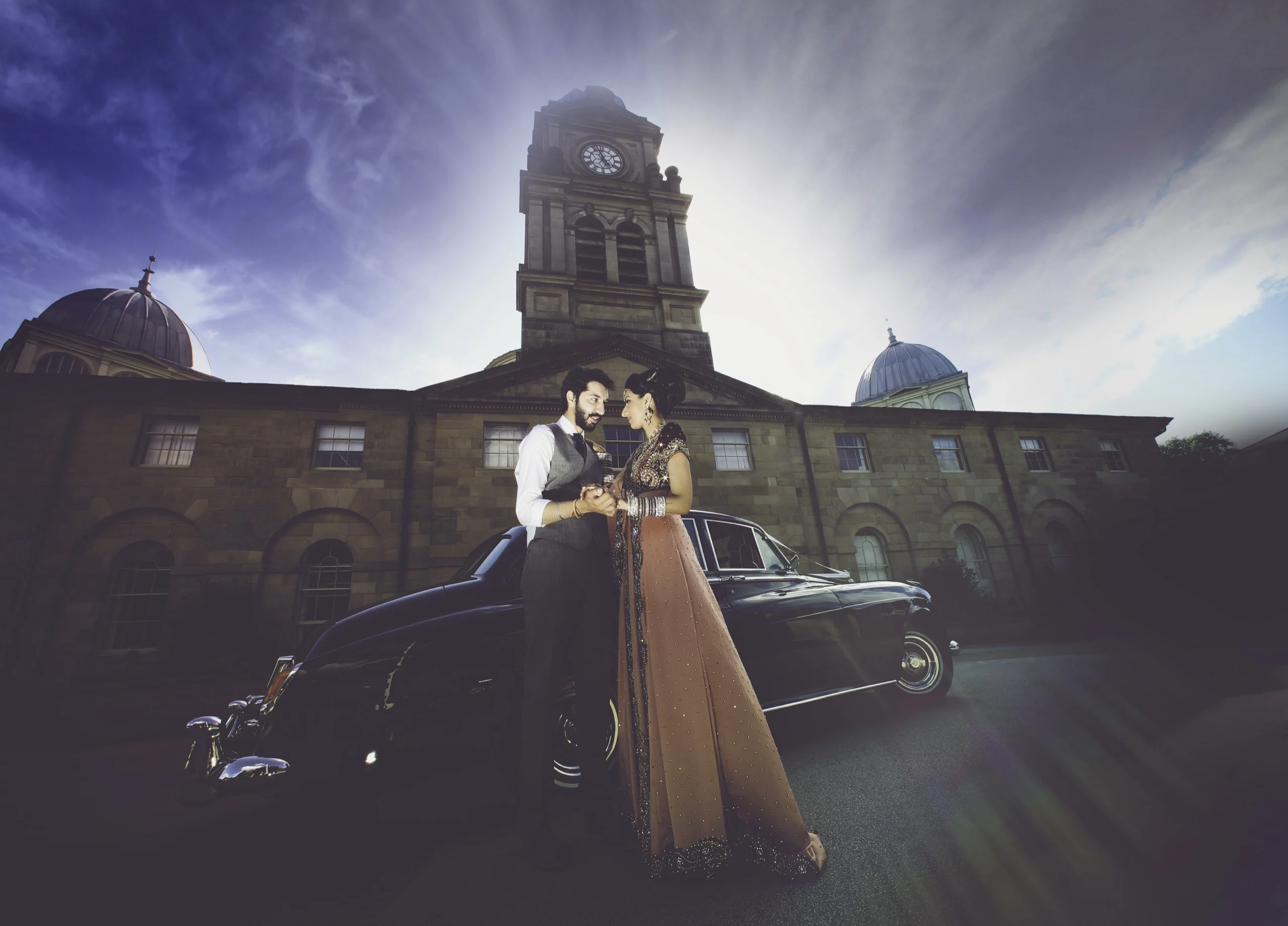
Taking your own UK photographer and filmmaker abroad means paying for their usual coverage plus travel and accommodation. In return, you get a team you have met, who know your family, your traditions and your style, and who can tell the story of a UK ceremony and a celebration abroad as one.
This guide covers why couples do it, what a travel quote should include, where to hold the legal ceremony, and local rules and light. Rules on cameras in ceremonies vary abroad just as they do at home, so our guide to ceremony photography rules in the UK is a useful list of questions to ask any officiant, wherever you marry.
Why take your own UK team abroad?
A local photographer saves you flights and knows the venue, and for some couples that is the right choice. Couples who take a UK team usually do it for four reasons:
- You meet them first. A call, or a coffee in London, tells you more than a portfolio ever will. You will spend several days with this team.
- They know your traditions. Many destination weddings are multi-day Asian or fusion celebrations: mehndi, sangeet, a civil ceremony and a religious ceremony on different days. A team who already knows the pheras or the Anand Karaj doesn’t need it explained on the morning.
- One story, across two countries. If you hold a legal ceremony in the UK and a celebration abroad, or a party back home later, one team means one set of photographs and one film.
- Photo and film together. One team plans the day, agrees positions and colour, and stays out of each other’s way. Our guide to booking your photographer and filmmaker together explains the trade-offs.
What does a destination wedding travel quote cover?
At Emotion, your coverage is priced exactly as it is at home, event by event, and travel and accommodation are added at cost, with no markup. Whoever you book, a clear travel quote should show each of these:
| Item | What it covers | What to ask |
|---|---|---|
| Coverage | The hours or events you want covered, priced as at home | Is each event priced separately? |
| Flights | A return flight for each team member | Who books, and what happens if your dates change? |
| Kit | Extra baggage for cameras, lenses, microphones, lighting and spares | Is kit carried on, or checked in? |
| Accommodation | Usually from the night before the first event | Can we use rooms the venue sets aside for suppliers? |
| Days | Travel days, plus any extra events such as a welcome dinner or day-after shoot | Which days are charged as events, and which as travel? |
| Local transport | Airport transfers and travel between venues | Will the planner arrange it, or the team? |
| Insurance | Professional indemnity, public liability and cover for kit | Does it cover working abroad? |
Check two money points with any supplier. First, VAT: according to GOV.UK, businesses must register once taxable turnover passes £90,000, and registered suppliers add 20%, so ask whether a quote includes it. Second, ask whether travel is charged at cost or with a margin.
As a baseline, Bridebook’s 2026 data puts average UK spend at £1,484 on a photographer and £1,514 on a videographer. A destination quote starts from your UK coverage and adds travel on top. For more on what drives the numbers, see our guide to what wedding photography and film cost in the UK, or get a price for your date.
Sample schedule: a three-day destination wedding
This is the kind of schedule we plan, and it shows how the days in a quote add up.
| Day | What happens | Coverage |
|---|---|---|
| Day 1 | Team flies out, sees the venue and checks the light | Travel day |
| Day 2 | A Lovestory film by day; welcome drinks, dinner or a mehndi in the evening | Extra events |
| Day 3 | The wedding: preparations, ceremony, portraits, dinner, speeches, party | Main event |
| Day 4 | A relaxed day-after portrait session, or a farewell brunch | Optional extra event |
| Day 5 | Team flies home | Travel day |
We usually arrive the day before the first event, so we can see the venue, find the light and be fresh for the morning.
Should the legal ceremony be at home or abroad?
Many couples hold a short civil ceremony in the UK and a celebration abroad. The UK steps are familiar and predictable: you give notice at your local register office at least 29 days before, then marry at a register office or approved venue in front of a registrar and two witnesses. Our guide to getting married legally in England and Wales covers it in full.
Marrying legally abroad follows the rules of the country you marry in, and those vary a great deal. Check with that country’s authorities and your planner early, before you fix a date.
Two hours of coverage is usually enough for a register office wedding, and if it is just the two of you and two witnesses, our guide on how to elope in the UK explains how couples plan it. We can cover both ceremonies, so the legal one and the celebration sit together.
Working with local rules abroad
Every country, and often every venue, has its own rules. The ones that affect photography and film most:
- Permits. Beaches, historic sites and public squares may need a permit for photography, filming or a ceremony. Your venue or planner usually knows; we ask the right questions early.
- Drones. Rules differ from country to country. We check what is possible for your location before the day, and we only fly where the venue, the local rules and the airspace allow.
- Places of worship. A church, temple or mosque abroad will have its own guidance on where we stand and what we record, just as at home. We ask in advance and follow it.
- Sound. Outdoor ceremonies are often windy, so we use small, discreet microphones to keep your vows clear.
How does the light change abroad?
In southern Europe and North Africa, the midday sun is fierce and flattering to nobody, and hard on older guests. Many couples move the ceremony later in the afternoon, so it is cooler for everyone and portraits fall in the softer light before sunset.
Look up the sunset time for your venue and date before you fix the ceremony time, and plan portraits for the last hour of light. Our golden hour guide explains the idea using UK times.
Lovestory shoots: making the most of being there
A Lovestory is an optional pre-wedding film of the two of you, made somewhere that means something to you. Abroad, it makes the most of a place you have travelled a long way to reach, without the pressure of the wedding day timeline. It works best in the day or two before the wedding, when you can change outfits, wander and use locations you wouldn’t reach on the day itself. A day-after portrait session does the same for photographs.
Our film A Lovestory in Marrakech shows what a Lovestory can do with a place. You can see more of how we plan these trips on our destination weddings page.
From behind the camera
The first thing I do at a destination wedding is walk the venue at the time the ceremony will start. Plans made on a video call rarely survive the real sun: a terrace that looked perfect is in full glare at 4pm, or the only shade is behind the guests. Arriving the day before means we can fix that with your planner in good time.
Kit matters more abroad, because there is no hire shop round the corner, so whoever you book, ask what backup they bring. On the day itself, we work exactly as we would at home: quietly, without flash during the ceremony, and with every word of the speeches recorded.
Frequently asked questions
How much does it cost to take a UK wedding photographer abroad?
Most UK studios price your coverage as they would at home, then add travel. A good travel quote lists flights for each team member, extra baggage for kit, accommodation, local transport and any extra days, such as a welcome dinner. Ask whether travel is charged at cost or marked up, and whether the quote includes VAT.
Do we have to book our photographer’s flights and accommodation?
Usually not. Most teams book their own travel once your plans are confirmed and pass on the cost. If your venue or planner has rooms set aside for suppliers, that often works well too. Agree in writing who books what, and what happens to the cost if flights or dates change.
Is it cheaper to hire a local photographer abroad?
Often, because you save on flights and accommodation, and a local photographer knows the venue and the rules. What you give up is meeting the team in person before the day, a shared language with your family, and, if you hold a UK ceremony or a later celebration, one consistent set of photographs and one film.
Should we get legally married in the UK or abroad?
Many couples hold a short civil ceremony in the UK, then a celebration abroad, because the UK steps are familiar: give notice at least 29 days ahead, then marry at a register office or approved venue with two witnesses. Marrying legally abroad follows that country’s rules, so check with its authorities and your planner.
Can you film drone aerials at a wedding abroad?
Sometimes. Drone rules differ from country to country, and venues, historic sites and airspace near airports can rule them out. We check what is possible for your location before the day. If a drone isn’t allowed, a well-planned walk with a handheld camera often tells the story of the place just as well.
Keep reading
- How to elope in the UK: if you want the legal ceremony at home to be small and simple.
- How much do wedding photography and film cost in the UK?: the UK figures your destination quote builds on.
- Multi-day Asian wedding timeline: planning photo and film event by event, which works the same way abroad.
Tell us where you are going, and we will send a price for your days with a travel estimate. Check your date or book a call.