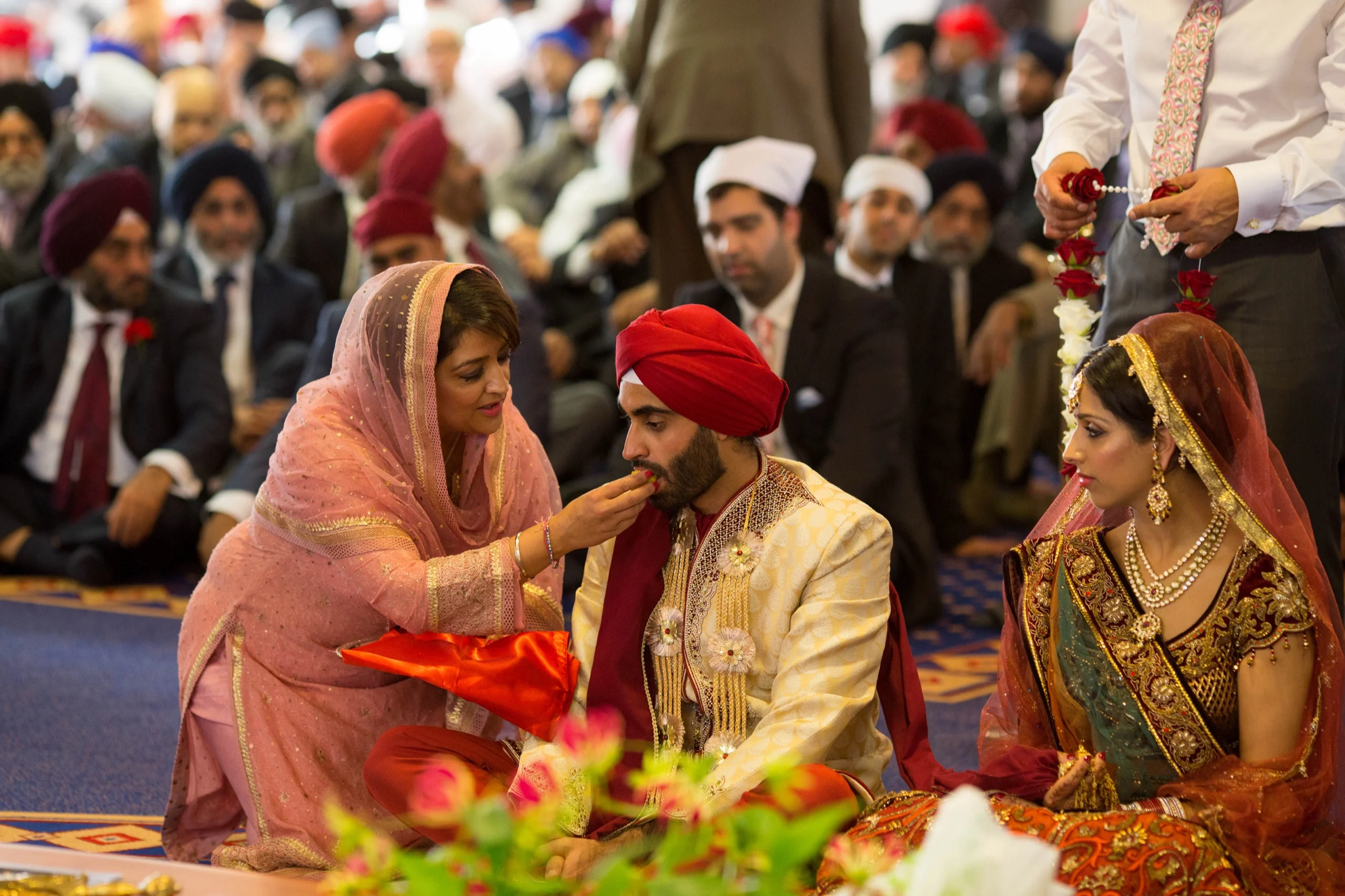
Most gurdwaras welcome a photographer and filmmaker at an Anand Karaj, within their own guidance. Everyone covers their head and removes their shoes, there is no tobacco or alcohol on the premises, flash is not used during the ceremony, and the crew stays discreet: never turning their back on the Guru Granth Sahib, never standing above it, and keeping to positions agreed with the granthi or committee.
This guide is for the couple and family, who can ask the gurdwara the right questions early and brief the guests. It fits into the morning described in our Sikh wedding day timeline, and into the wider week in our multi-day Asian wedding timeline.
Can you take photos in a gurdwara?
Usually, yes, but the decision belongs to your gurdwara, not to your photographer. In practice the granthi and the management committee set the rules, and they differ: some gurdwaras let the crew move quietly around the edge of the darbar hall, others ask for one fixed position, and a few limit filming during the laavan.
Ask when you book your date. Here is what to ask, and why:
| Question for the gurdwara | Why it matters |
|---|---|
| Is photography and filming allowed during the Anand Karaj and the laavan? | Some gurdwaras allow one but not the other, or limit the laavan |
| Where may the photographer and filmmaker sit or kneel? May they move? | Decides whether we see faces or the backs of heads |
| May the filmmaker leave a small camera on a low stand at the side or back? | A fixed wide angle keeps the whole ceremony in the film |
| May we take an audio feed from the sound system, or place a small recorder near the ragis? | The laavan are sung, so this is where the sound of your film comes from |
| Are posed photographs allowed in the darbar hall after the ceremony? | Some prefer them outside or in another room |
| Is there another wedding after ours? | Tells us how long we have for family photographs on site |
| Any rules on drones over the grounds? | Ask before you plan aerials |
Send the answers to your photographer and filmmaker. We are happy to speak to the gurdwara for you, but a request from the family is often answered faster. For drones in particular, see our guide to drone wedding filming rules in London and Kent.
Head coverings: who needs one?
Everyone. Men, women and children, Sikh or not, and that includes your photographers and filmmakers. Most gurdwaras keep rumals (head coverings) at the door, but a few practical points help:
- Guests: a scarf or a patka that stays in place when they sit on the floor and stand for the ardas. Thin, slippery fabric slides off.
- The bride: pin the chunni so it stays put through four laavan. It is in almost every ceremony photograph.
- The crew: we bring our own head coverings that stay on while we kneel and move. If the baraat is wearing matching turbans or rumals, tell us the colour so we don’t clash in the family photographs.
Shoes off, and what that means on the day
Shoes come off at the entrance, and everyone walks the darbar hall in socks or bare feet. Expect a queue at the shoe racks after the milni, so build ten minutes into your timeline, and put a chair by the door for older relatives.
No tobacco or alcohol on the premises
This is one of the clearest rules in every gurdwara. Remind the baraat before they set off, and treat the grounds and car park as part of the gurdwara. It is a small conversation that avoids an awkward moment in front of the committee, and in front of the cameras.
Where guests sit, and where the crew can go
The sangat sits on the floor, often with men and women on separate sides. Most gurdwaras ask that nobody sits with their feet pointing towards the Guru Granth Sahib. The couple sit at the front, facing it.
For the crew, the basic rules are simple: stay low, move slowly, never turn your back on the Guru Granth Sahib, never stand above it or between the congregation and the palki. Within that, a typical plan looks like this, though your granthi may change it.
| Moment | Photographer | Filmmaker |
|---|---|---|
| Groom seated, bride’s entrance | Kneeling at the side, near the front | One fixed camera wide at the side or back |
| Ardas (everyone stands) | Still, not moving | Recording from the fixed position |
| Palla ceremony | Low, to the side and ahead of the couple, to see the father’s face and the bride’s hand | Second camera close at the side |
| The four laavan | Moving slowly along the edge, kneeling at the corners | Fixed wide, plus a handheld camera at the side |
| Hukamnama and karah parshad | Still, at the side | Fixed wide |
When karah parshad is offered, our crew receives it with cupped hands like everyone else.
Why there’s no flash
We never use flash during a service, and in our experience most gurdwaras ask for none. It distracts the sangat and the couple, and it isn’t needed: darbar halls usually have daylight from the windows and their own lights, and modern cameras handle the rest. Our films are shot on cinema cameras that work well in low light, so the ceremony looks as it felt.
If you want bright, posed family photographs, take them outside or in another room after the ceremony, where a light can be used without disturbing anyone.
Guests’ phones during the Anand Karaj
Phones are the most common problem we see at any ceremony. In a gurdwara, a relative standing in the aisle to film the laavan blocks the sangat’s view as well as ours, and is often standing when everyone else is seated.
Many couples ask for an unplugged ceremony: phones away from the moment they enter the darbar hall to the karah parshad. Ask the granthi or the stage secretary to make a short announcement before the ceremony, and put a line in the invitation. Guests can take as many photos as they like in the langar hall afterwards. Our guide to asking guests to put their phones away has wording you can borrow.
Recording the kirtan and the laavan
In an Anand Karaj there are no spoken vows from the couple. The sound of the ceremony is the granthi’s reading and the ragis’ singing, so this is where your film’s audio comes from. With the gurdwara’s permission, we take a feed from their sound system or place a small, discreet recorder near the ragis. That way every lav is clear in your ceremony film, and the kirtan can carry your highlight film.
The palla moment: brief it in advance
The bride’s father placing one end of the palla in her hand is quick, quiet and, for many families, the moment of the day. Tell us who will place it (sometimes it is another elder), where they will sit, and whether they will stand or kneel. With that, the photographer is already in position, low and to the side, when it happens.
The meaning of the palla, the laavan and the rest of the ceremony is explained in our older post on Sikh wedding ceremony traditions.
What to tell your family and guests
A short message on your wedding website or family WhatsApp saves explaining it at the door:
- Cover your head; bring a scarf or patka that stays on.
- Shoes come off at the entrance.
- Dress modestly, with legs covered, as you will sit on the floor.
- No tobacco or alcohol anywhere at the gurdwara.
- Phones away in the darbar hall, please.
- Arrive in time for the milni.
From behind the camera
The gurdwaras where our coverage is best are the ones where we met the granthi before the ceremony, even for five minutes on the morning. We say who we are, show where we hope to kneel, and ask what they would prefer. That short conversation is what lets us stay close to the palla and the laavan without anyone feeling we are in the way.
Covering our heads, working in socks and keeping still during the ardas isn’t a restriction on the work. It is the reason the sangat forgets we are there. See our Sikh wedding films for how that looks on screen.
Frequently asked questions
Can you take photos in a gurdwara?
Usually, yes. Most gurdwaras allow a photographer and filmmaker at an Anand Karaj, within their own guidance: heads covered, shoes off, no flash, and discreet positions agreed with the granthi or committee. Rules vary from one gurdwara to the next, so ask yours before the day and share the answer with your photographer.
Do photographers need to cover their heads in a gurdwara?
Yes. Everyone in a gurdwara covers their head, including photographers and filmmakers, whatever their own faith. Most gurdwaras keep head coverings at the door, but a professional crew should bring their own that stays in place while they kneel and move. They also remove their shoes and work in socks.
Can guests take photos during the Anand Karaj?
That is for your gurdwara and for you to decide. Many couples ask guests to keep phones away during the laavan so the sangat can follow the ceremony and the photographer’s view stays clear. A short announcement before the ceremony, or a note in the invitation, works better than a sign alone.
Is flash allowed in a gurdwara?
In our experience most gurdwaras ask for no flash during the ceremony, and we never use flash during any service. Darbar halls are usually light enough, with daylight from the windows and the hall’s own lights, and modern cameras handle the rest. If you want posed photographs with flash, ask whether they can be taken outside or after the ceremony.
Keep reading
- Sikh wedding day timeline in the UK: clock times for the gurdwara morning, from the milni to the doli.
- Can you take photos during the ceremony?: how the rules compare in churches, register offices, mosques and synagogues.
- Unplugged ceremony: asking guests to put phones away: wording for invitations and announcements.
Planning an Anand Karaj? Tell us your gurdwara and your date, and we will talk you through the morning.