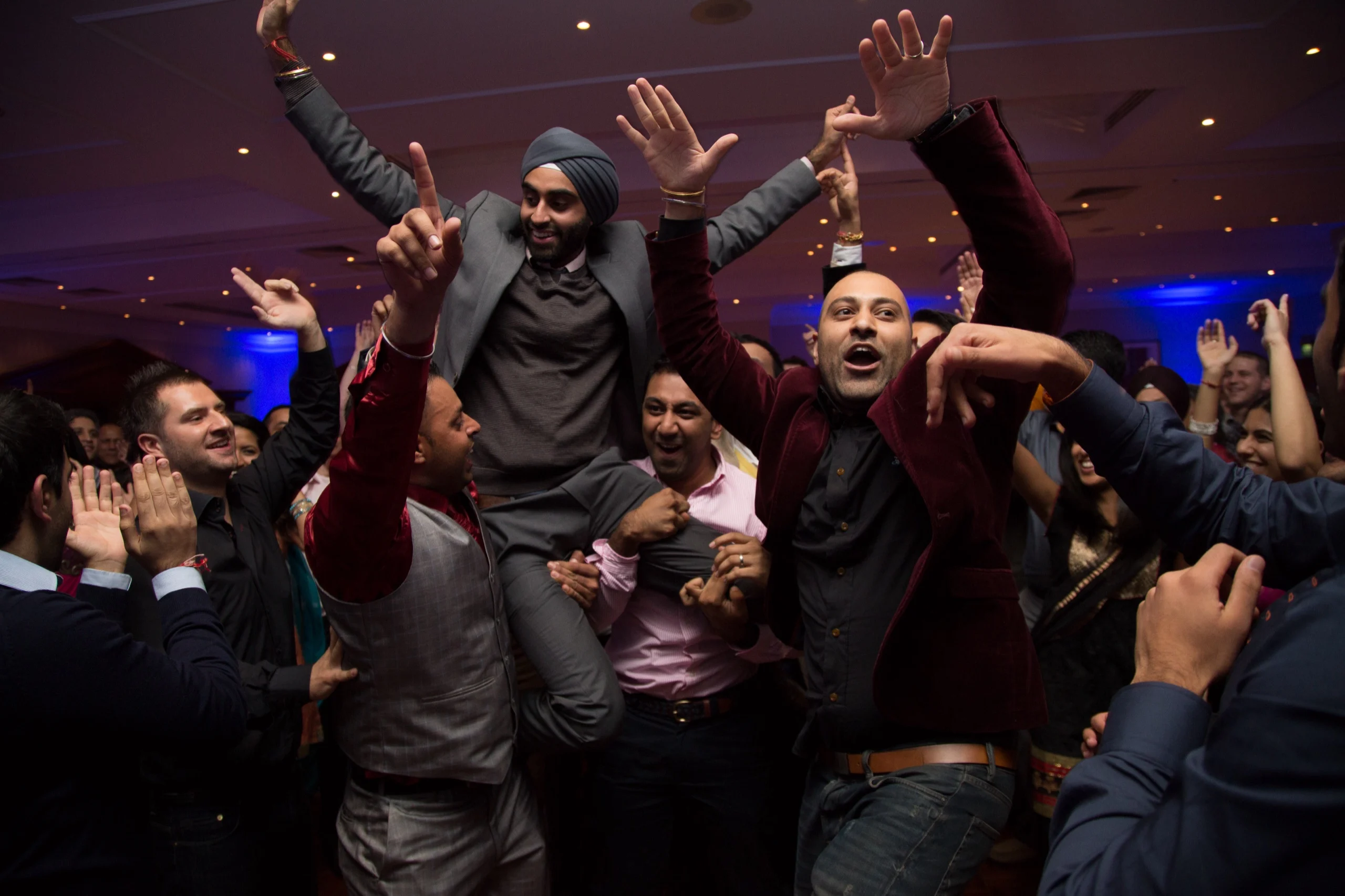
An unplugged ceremony is one where you ask guests to put away phones and cameras until you are married, so they watch you with their own eyes and your photographer and filmmaker have a clear view and clean sound. It is a polite request, not a rule, and works best when it is kind, short and said by the right person. Below: why couples choose it, wording for church, civil, gurdwara, nikah and chuppah ceremonies, a “phones up” moment, who should announce it, signs, and what it does for your film.
The ceremony is the centre of every wedding day plan, and our UK wedding day timeline guide shows how it fits around everything else.
What is an unplugged wedding ceremony?
From the moment guests sit down until you walk back down the aisle married, phones, tablets and cameras stay in pockets and bags.
Most couples keep it to the ceremony, and a few extend it to the first dance or a private ritual. We wouldn’t unplug a whole wedding: guests’ own pictures at the party are part of the day.
Why have an unplugged ceremony?
For your photographs. The walk down the aisle is one of the most important photographs of the day, and the most common thing spoiling it is an arm holding a phone into the aisle. Guests step out for a better angle, tablets block whole rows, and a phone flash can spoil a frame. Faces lit by screens don’t look like people watching a wedding.
For your film. Microphones pick up everything: a ringtone during the vows, a notification, a shutter sound. On film the problem isn’t one frame but several seconds of the most important audio of the day.
For your guests. People watching rather than recording are more moved, and it shows in their faces. Some guests would also rather not end up on social media. The ICO says photos taken purely for personal use are outside data protection law, but posting them publicly is likely to go beyond personal use, and children need extra care.
Unplugged ceremony wording for every kind of wedding
Whatever your ceremony, check first with whoever leads it. Many officiants already have their own wording, and some will be glad to say it for you.
Church weddings
In the Church of England, the vicar has the final say on photography and filming during the service, and some churches don’t allow filming during the service at all. Ask your vicar what they prefer. Wording for the vicar or an usher:
“Before we begin, [names] have asked that we keep this service free of phones and cameras. Their photographer will capture everything, and there will be time for your own photos as they leave the church.”
For the order of service: “We warmly invite you to be fully present with us during the service. Please switch off your phones. There will be time for photographs afterwards.”
Our guide to church wedding photography and filming rules covers what your photographer and filmmaker can do.
Civil ceremonies and register offices
Registrars’ rules on photography vary by council. Surrey lets a photographer or videographer record the ceremony; others restrict it, and many stage a posed signing afterwards. Check with your registration service, then:
“[Names] would love you to be with them in this moment, not behind a screen. Please put your phones away until they are married. Their photographer will share the pictures.”
Our guide to register office wedding photography explains how a short ceremony can still give you a full set of photographs.
Anand karaj at a gurdwara
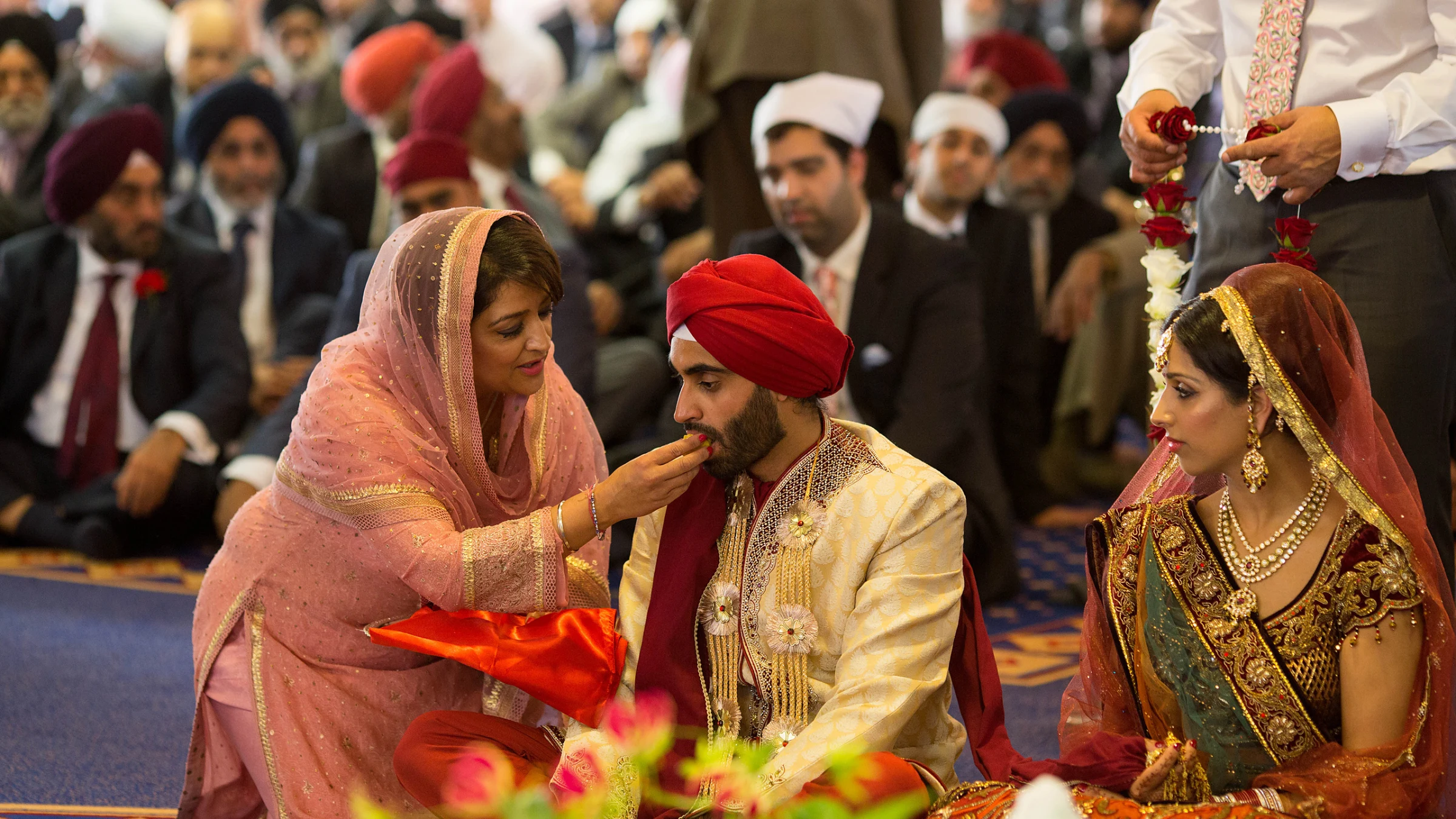
The darbar hall is a place of worship first. Ask the granthi or gurdwara committee how they would like guests to be told, and follow their guidance. A gentle line for an announcement, or a card at the entrance where guests take their head coverings:
“Please keep phones switched off and out of sight in the darbar hall during the Anand Karaj. The family’s photographer will share pictures of the ceremony. Thank you.”
See our guide to photographing and filming in a gurdwara for how we work in the darbar hall.
Nikah
At a nikah, an unplugged request is often as much about privacy as photography. Some guests, and some members of the family, may prefer not to be photographed or posted online, and some events have separate spaces for men and women. Ask your imam how they would like it handled, and agree with your family which moments, if any, should be private. Wording:
“[Names] kindly ask that no photographs or videos are taken during the nikah, and that no pictures of guests are shared online. Their photographer will capture the day with care.”
Our nikah photography etiquette guide covers privacy and segregated events in more detail.
Jewish weddings under the chuppah
Many rabbis are happy to make the request before the processional. The circling, the blessings and the breaking of the glass are over quickly, and they are exactly the moments a raised phone blocks. Wording:
“As [names] come to the chuppah, we ask you to put your phones away and be with them under the canopy. When the glass breaks, there will be plenty of time for mazel tov, and for photos.”
Our Jewish wedding timeline shows where the chuppah, yichud and hora fall in the day.
Hindu ceremonies and long rituals
Mandap ceremonies are often long, so many families choose a middle way: phones away for key rituals such as the kanyadaan, the pheras and the saptapadi, with the priest or an MC letting guests know when.
Should you give guests a “phones up” moment?
Yes. It turns a request into a gift, and guests respect it more. A few options:
- After the kiss or the recessional, the officiant says: “You can take your phones out now.”
- A ten-second pause at the end of the aisle or on the steps, turned towards your guests.
- The posed signing at a civil ceremony, when registrars often invite guests to take pictures.
- Confetti, which everyone wants to photograph anyway.
Guests photographing you often makes one of the warmest pictures of the set.
Who should announce an unplugged ceremony?
The person leading the ceremony, wherever possible: guests listen to a vicar, registrar, celebrant, rabbi or imam far more than to a sign. Otherwise:
- An usher or the best man, a few minutes before you arrive, while guests are seated.
- Your master of ceremonies or toastmaster, at a venue ceremony.
- A family member, at a gurdwara or a home ceremony, with the committee’s or family’s agreement.
Back it up with a line on your wedding website or invitation, a sign at the entrance and a line in the order of service.
Unplugged wedding sign wording
Keep signs short, warm and readable from a few feet away:
- “Welcome to our unplugged ceremony. Please switch off your phones and be here with us.”
- “We have a photographer. You have a front-row seat. Phones away until we say I do.”
- “No phones, please, until we’re married. We’ll share every photo.”
How an unplugged ceremony changes your wedding film
This is where unplugged ceremonies make the biggest difference. A highlight film is built on your own words: the vows, the readings, the officiant’s lines. Those come from small microphones close to you, which also catch whatever happens around them. A clean ceremony lets the editor use any moment; a noisy one leaves fewer choices.
The picture changes too. Wide shots show faces rather than screens, the aisle is clear for the processional, and reaction shots, a father wiping his eyes or a friend laughing, only happen when nobody is holding something in front of their face.
Our guide to what’s in a wedding film explains the highlight film and full ceremony edit, and our wedding videography page shows how we record sound.
From behind the camera
At most weddings we film, the processional shows whether the announcement worked. When it was made well, the aisle is clear and every face is turned towards the person walking down it. When it wasn’t, we are working around arms and screens, and the guest in the aisle seat rarely realises they have leaned into the shot.
The other thing we notice is sound. In a quiet ceremony, a single phone notification is clearly audible on the vows recording. It is nobody’s fault, and entirely avoidable. Unplugged or not, we agree positions with your officiant and work quietly, as our wedding photography page explains. For the other moment where words matter most, see filming wedding speeches.
Frequently asked questions
What is an unplugged wedding ceremony?
It is a ceremony where you ask guests to put away phones, tablets and cameras until you are married, so they watch with their own eyes and your photographer and filmmaker have a clear view and clean sound. It is a polite request rather than a rule, and most couples welcome phones again for the rest of the day.
Is it rude to ask guests not to take photos at a wedding?
No. Most guests are relieved to be told what you would like. Keep the wording warm, explain that your photographer will share the pictures, and give people a moment afterwards to take their own. It also protects guests who would rather not appear online, such as some guests at a nikah, and parents of young children.
Can guests take photos during a church wedding?
It depends on the church. In the Church of England the vicar has the final say on photography and filming during the service, and some churches don’t allow filming during the service at all. Ask your vicar when you meet them, and if they are happy to, ask them to make the unplugged announcement themselves.
Who should announce an unplugged ceremony?
The person leading the ceremony is best: the vicar, registrar, celebrant, rabbi, imam or, at a gurdwara, whoever the granthi or committee suggests. Guests listen to them. If that is not possible, an usher, the best man or your master of ceremonies can say it a few minutes before you arrive. A sign and a line in the order of service help too.
Keep reading
- Can you take photos during the ceremony?: the UK rules for photographers and filmmakers at every kind of wedding.
- Filming wedding speeches: how to make sure every word of the speeches is heard and recorded.
- What’s in a wedding film?: highlight films, full ceremony edits and why sound matters.
Planning your ceremony?
If you would like help with the wording, or with where your photographer and filmmaker will stand, book a call and we will talk it through with you.