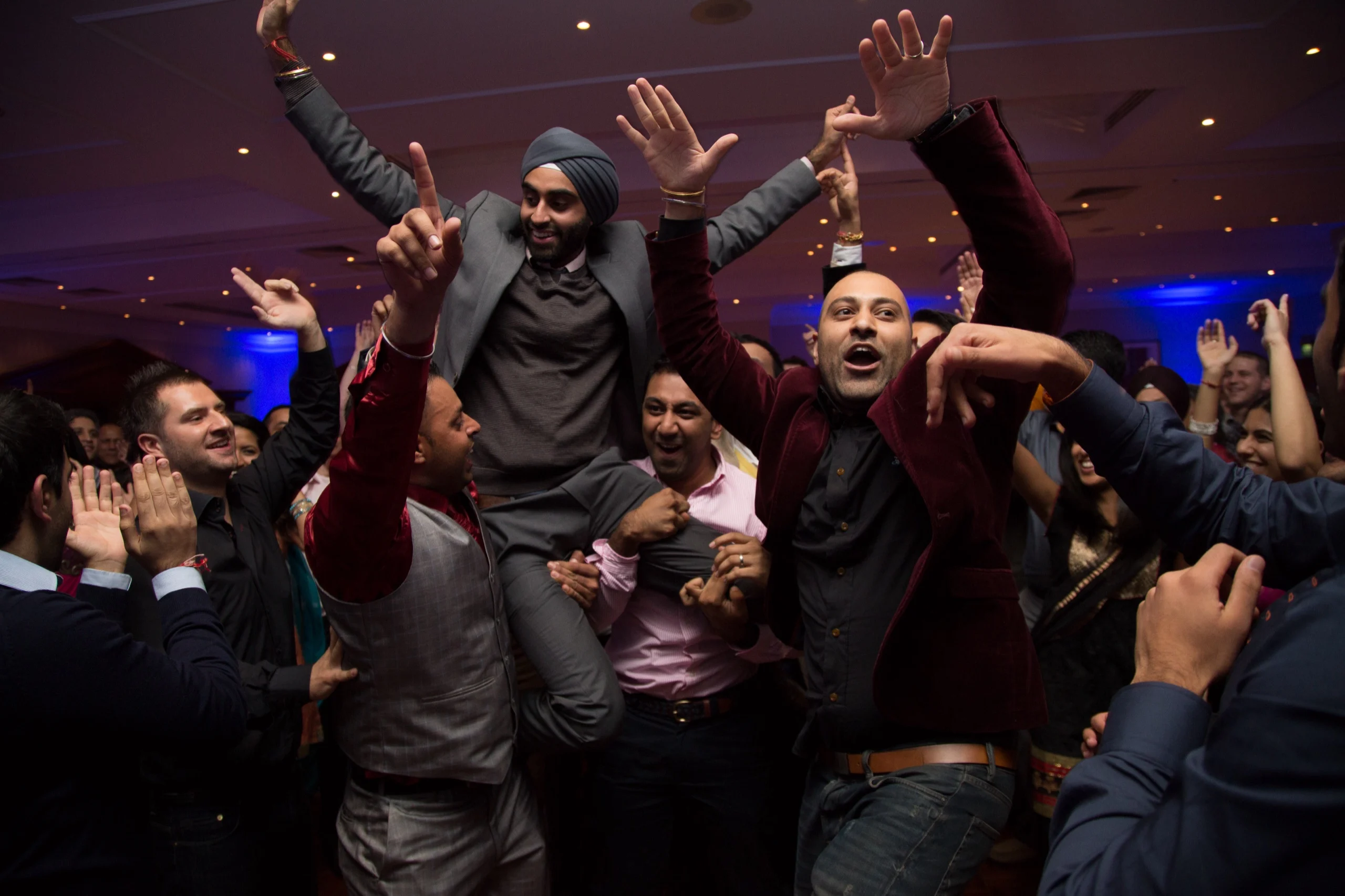
No, you don’t need one. Plenty of couples have a wonderful wedding with a photographer alone. But a film keeps things photographs can’t: your vows in your own voices, every word of the speeches, the way the people you love moved and laughed. Those are the things couples most often wish they had.
We photograph and film weddings, so we have no reason to push one over the other. This is an even-handed look at what film gives you, when you might not need it, and the middle ground. If you are comparing studios as well, our guide to choosing a wedding photographer and videographer covers the whole process.
The short answer: If you would ever want to hear your vows, the speeches or a grandparent’s voice again, book film, even a short one. If your budget only stretches to one, choose a photographer for the day you need, then look at a simple film that covers just the ceremony and speeches.
How many couples hire a wedding videographer?
According to Bridebook, about one in three UK couples book a videographer, compared with over 90% who hire a photographer. So film is still the exception rather than the rule.
Cost is part of the reason. Bridebook’s 2026 data puts the average UK spend on a videographer at £1,514, slightly more than the £1,484 average for a photographer, so film is not the cheaper add-on many people assume. Our guide to how much a wedding videographer costs in the UK explains what moves that figure.
Will I regret not having a videographer?
Some couples do and many don’t. You will see confident percentages quoted online, but we haven’t found a reliable UK survey behind any of them, so we won’t quote one.
What we can say is where regret tends to come from. It is rarely about the cinematic shots. It is about something specific and spoken: a father’s speech, a best friend’s toast, a grandparent’s blessing, vows you wrote yourselves. Photographs show those moments beautifully. They can’t let you hear them.
It is also why our simple wedding film exists. Many couples only realise how much they want a film once the date is close, and a short film covering the words of the day is often still possible.
What does a wedding film keep that photos can’t?
Photographs and film do different jobs. Here is what each keeps.
| Moment | What photographs keep | What film keeps |
|---|---|---|
| Your vows | The look on your faces | Your words, in your own voices, and the pause before you answer |
| The speeches | Laughter at the top table | Every word, the timing of the jokes and the room’s reaction |
| Grandparents and elders | A portrait to frame | Their voice, a blessing, the way they still dance |
| The ceremony music | The musicians at work | The kirtan during the laavan, the organ and hymns, a song chosen for the aisle |
| Arrivals and celebrations | The colour and the crowd | The dhol at the baraat, the hora, the cheer as the confetti flies |
| Children | Their expressions | What they said, and how they ran across the room |
| The first dance | The best two or three frames | The whole song, and the moment everyone joins in |
A wedding film is also how people who weren’t there, including children not yet born, will one day meet the people who were. For many families, that alone settles it.
What goes into each part of a film varies a lot between studios. Our guide to highlight, feature and full ceremony films explains the edits you can expect, and our guide to filming the speeches properly explains why sound needs planning.
When might you not need a wedding videographer?
There are good reasons to skip film, and we would rather you heard them from us.
- Your ceremony can’t be filmed. Under Church of England guidance the vicar has the final say on filming during the service, and some churches don’t allow it at all. Some synagogues, mosques and gurdwaras set limits too. Ask your officiant before you book. If the ceremony can’t be filmed and there are no speeches, a film loses much of its point.
- A very small, quiet wedding. A short register office ceremony with lunch afterwards and no speeches may be well served by photographs alone.
- You know you won’t watch it. Some people never rewatch video of themselves. Be honest about which of you that is.
- Film would squeeze your photography. If adding film means cutting your photographer’s hours below what your day needs, keep the photographer for the full day.
- Your priorities lie elsewhere. If you would rather spend the money on the honeymoon or on more guests, that is a perfectly good decision.
Is a wedding videographer worth the money?
It depends on what you will watch. Bridebook gives a typical UK range of £500 to £2,500 for a videographer, with London and the South East averaging more, at about £1,800 to £2,200. What changes the price is mostly hours, the number of filmmakers, the edits you receive and how sound is recorded. Our guide to wedding photography and film costs shows what each budget level typically buys.
A few ways to make film affordable without losing what matters:
- Cover fewer hours. The ceremony and speeches hold most of the words.
- Choose a weekday or winter date. With us, Monday to Thursday and winter weddings cost less.
- Book photo and film together. One team often costs less than two separate bookings. Our guide to booking your photographer and filmmaker together explains why.
- Book a simple film rather than a full production.
The middle ground: a simple wedding film
If you want the words but not a full production, a short film is the honest compromise. Ours is one filmmaker for up to four hours, with:
- a highlight film of two to three minutes, set to licensed music
- your ceremony in full, with clean audio of your vows
- the speeches, uncut
- delivery within four weeks
It suits a civil ceremony followed by lunch, an intimate wedding, a church service and speeches, or a single event within a bigger celebration, such as a nikah or a civil ceremony before an Asian wedding. It is also the option couples use when they decide on film late.
If you want preparations, every event across several days or a longer feature film, our full wedding films cover the whole day, with a highlight film of three to five minutes, the ceremony in full, the speeches uncut and an optional 15 to 20 minute feature film.
Can’t a guest just film it on their phone?
They can, and guests’ clips are lovely to have. But a phone at the back of the room picks up the room, not the vows. The guest filming misses the ceremony, and phones raised in the aisle end up in your photographs. That is why many couples ask for an unplugged ceremony.
A wedding content creator is different again: phone clips for social media, often shared the same day. A good addition, but not a replacement for a finished film.
Questions to help you decide
Talk these through together:
- Would we want to hear our vows and the speeches again in ten or twenty years?
- Is someone speaking whose words we would want to keep: a parent, a grandparent, a friend flying in from abroad?
- Can our ceremony be filmed? Have we asked the officiant?
- Do we watch videos of other people’s weddings, or our own family’s?
- Does our budget cover the photography our day needs first?
- Would a simple film covering the ceremony and speeches give us what matters?
Two yeses at the top of the list usually mean film is worth it.
From behind the camera
In our experience, the part of a wedding film people come back to is rarely the most cinematic part. It is the sound. That is why, as filmmakers, we spend as much time planning audio as pictures: small microphones agreed with the officiant for the vows, a recorder where the speeches will happen, a word with the band or DJ, and a backup running in case anything fails. When a couple can only stretch to one, we would usually suggest photography for the day and a short film for the words, rather than two half-measures.
Your questions, answered
Is a wedding videographer worth it?
It is worth it if you would want to hear your day again: the vows in your own voices, every word of the speeches, the people you love talking and laughing. Bridebook puts the average UK videographer spend at £1,514 in 2026. If that is out of reach, a short film covering only the ceremony and speeches keeps the words for much less.
Will I regret not having a videographer?
Some couples do and many don’t. There is no reliable UK survey on it, so be wary of confident percentages. Regret, when it comes, is usually about something specific: a parent’s speech, a grandparent’s voice, vows you wrote yourselves. If any of those would matter to you, a short film is a sensible insurance policy.
Can we book a wedding videographer at short notice?
Often, yes, especially for a weekday or winter date or for a few hours of coverage. Some studios keep a simple film option for exactly this: one filmmaker covering the ceremony, the speeches and a short highlight film. Ask as soon as you decide, with your date, venues, ceremony time and roughly when the speeches are.
Is a wedding content creator the same as a videographer?
Not quite. A content creator usually films short clips on a phone for social media, often shared on the day. A videographer records the ceremony and speeches with proper microphones and edits a finished film for you to keep. They do different jobs, and some couples have both.
Keep reading
- What’s in a wedding film?: highlight, feature and full ceremony edits, and how long each one runs.
- Filming wedding speeches: how to make sure every word is recorded and heard.
- One studio or two?: what changes when your photographer and filmmaker work as one team.
Still undecided? Book a call and we will talk through your day honestly, including whether you need film at all.